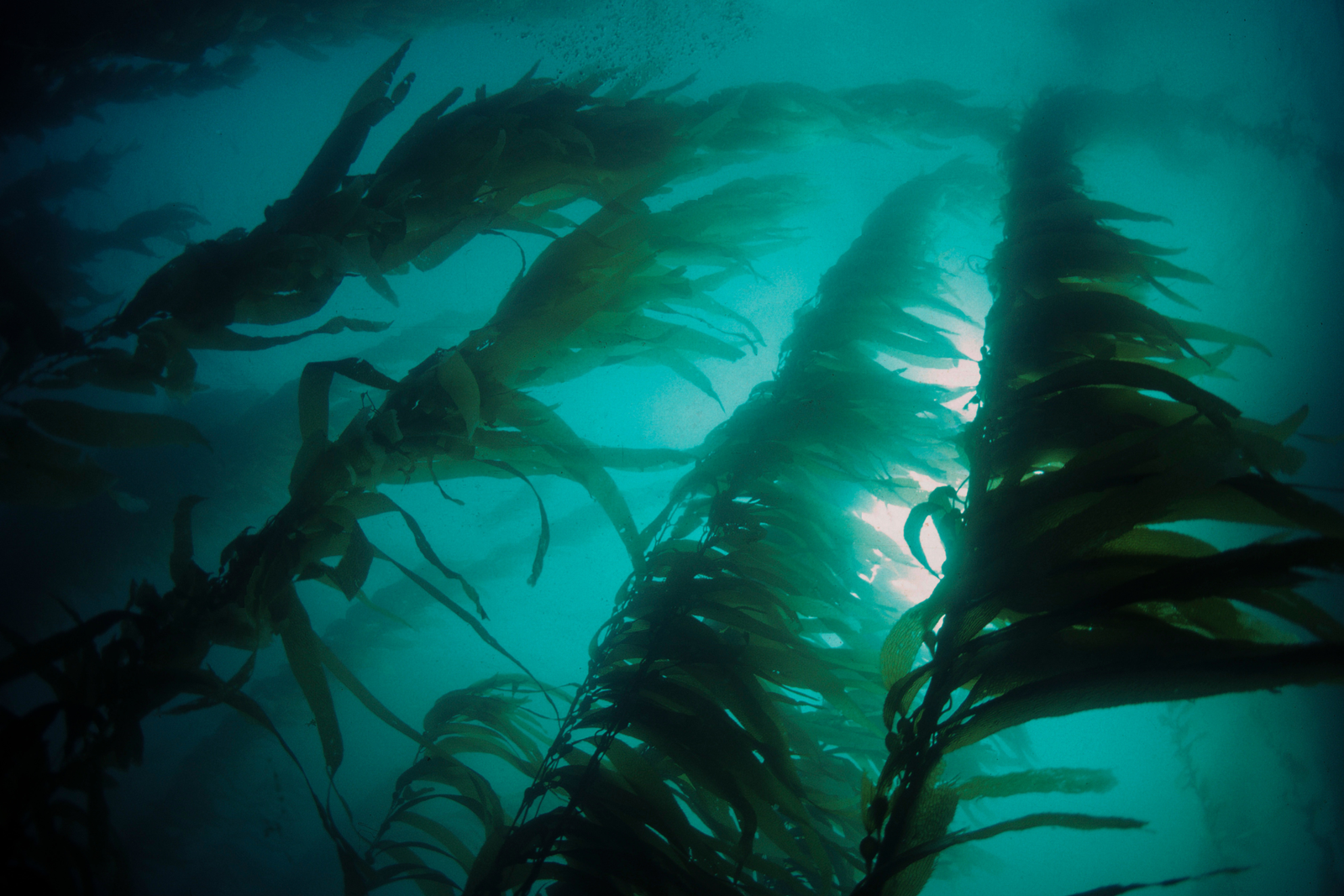
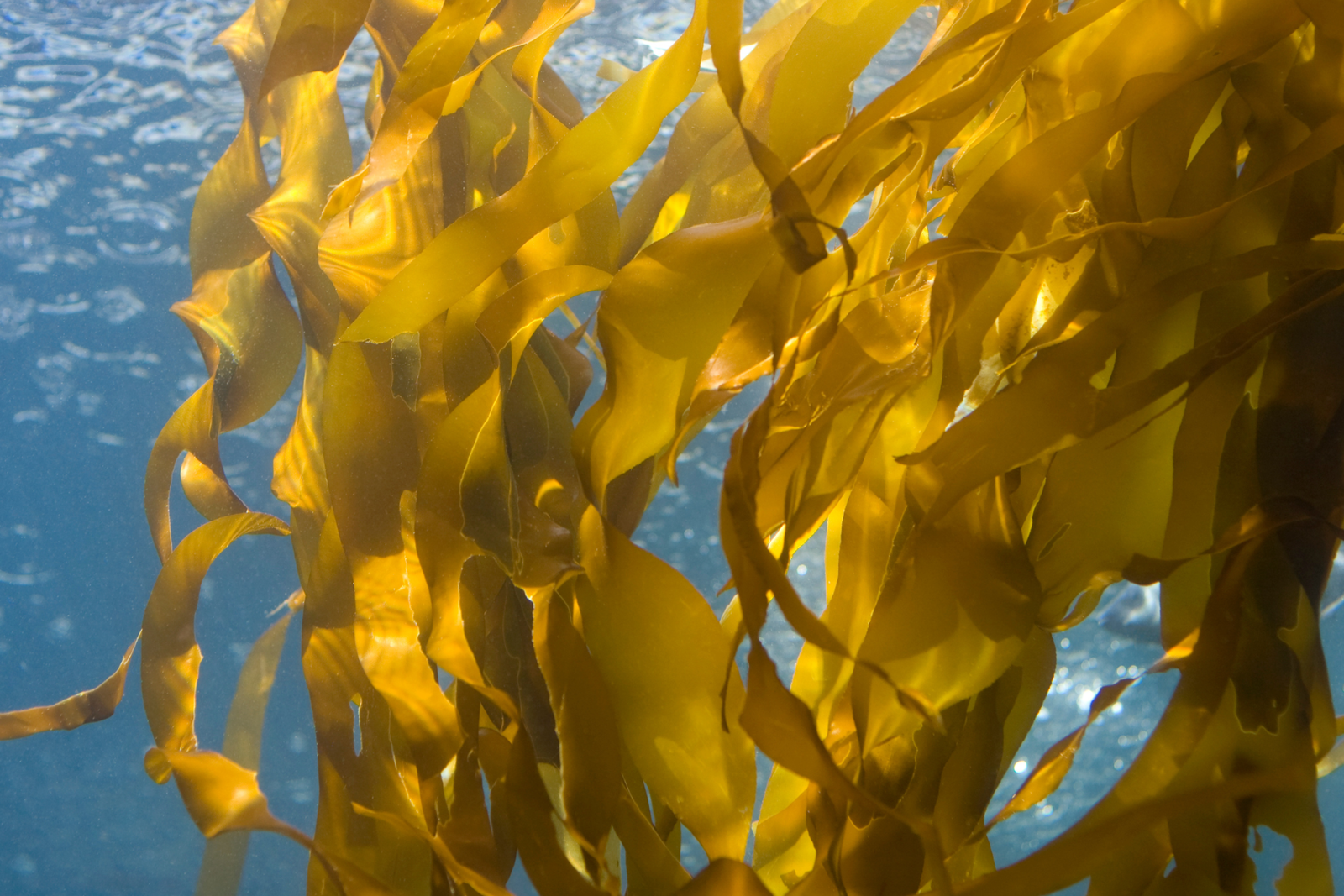
The cultivation of brown seaweed has proven for the first time the economic viability of marine aquaculture and opened up new opportunities for restoring marine ecosystems.
Amid the growing climate crisis, humanity is seeking new ways to reduce its carbon footprint and restore natural ecosystems. One of the most promising areas is the cultivation of seaweed — plants capable of absorbing enormous amounts of carbon dioxide while simultaneously restoring ocean biodiversity.
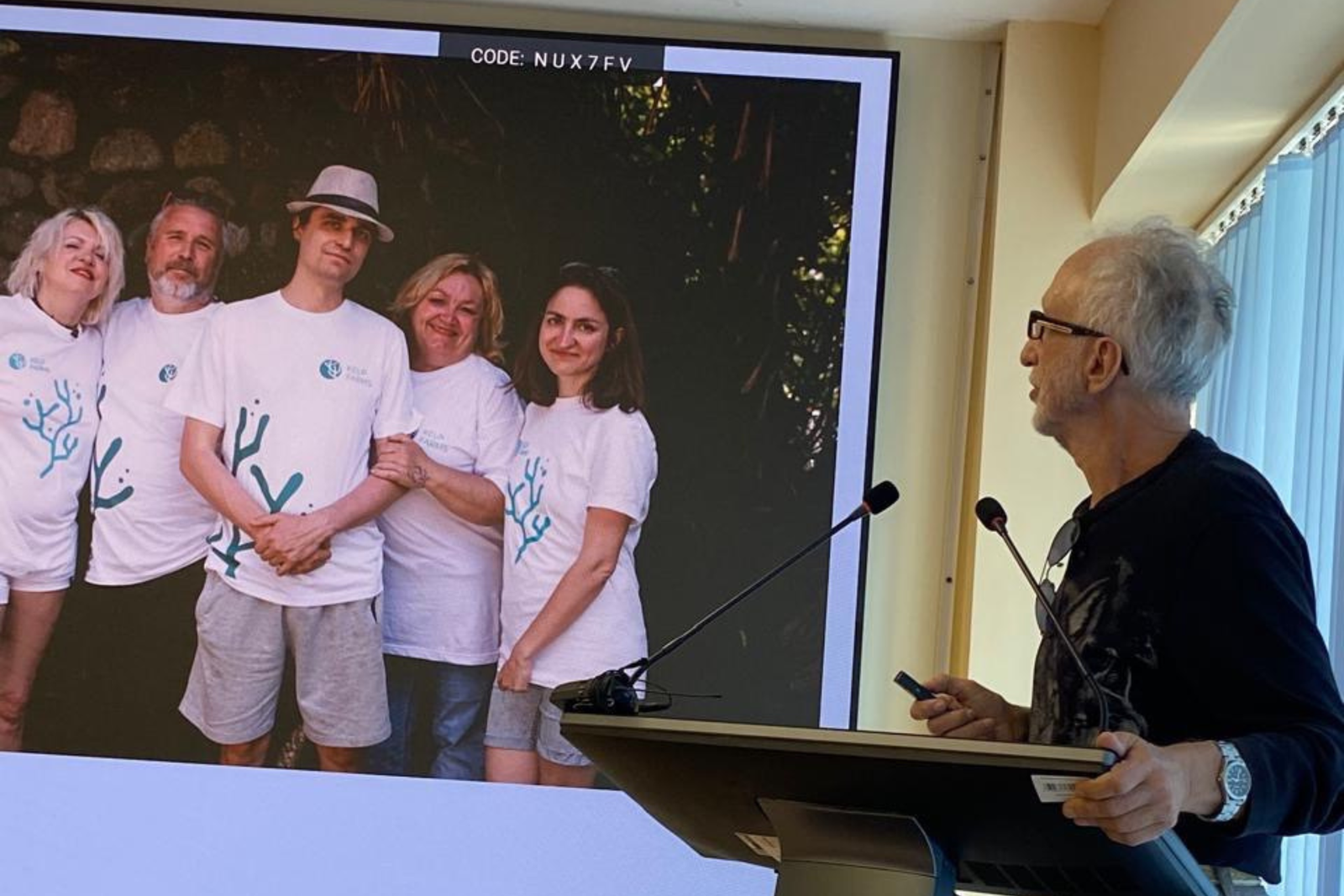
KELP FARMS has pioneered research in the field of brown seaweed cultivation.
Revolution in the Sea of Japan: Undaria Seaweed
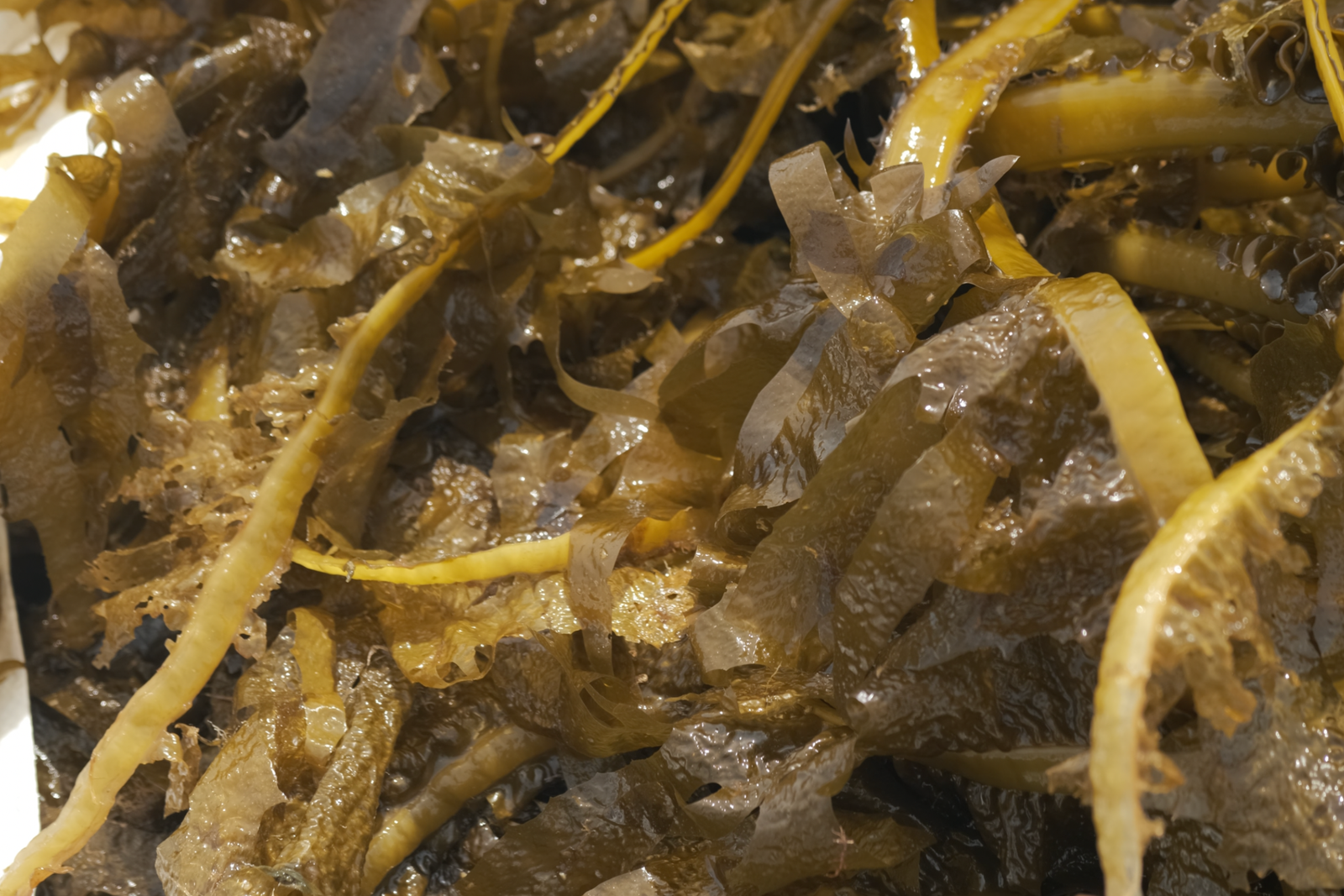
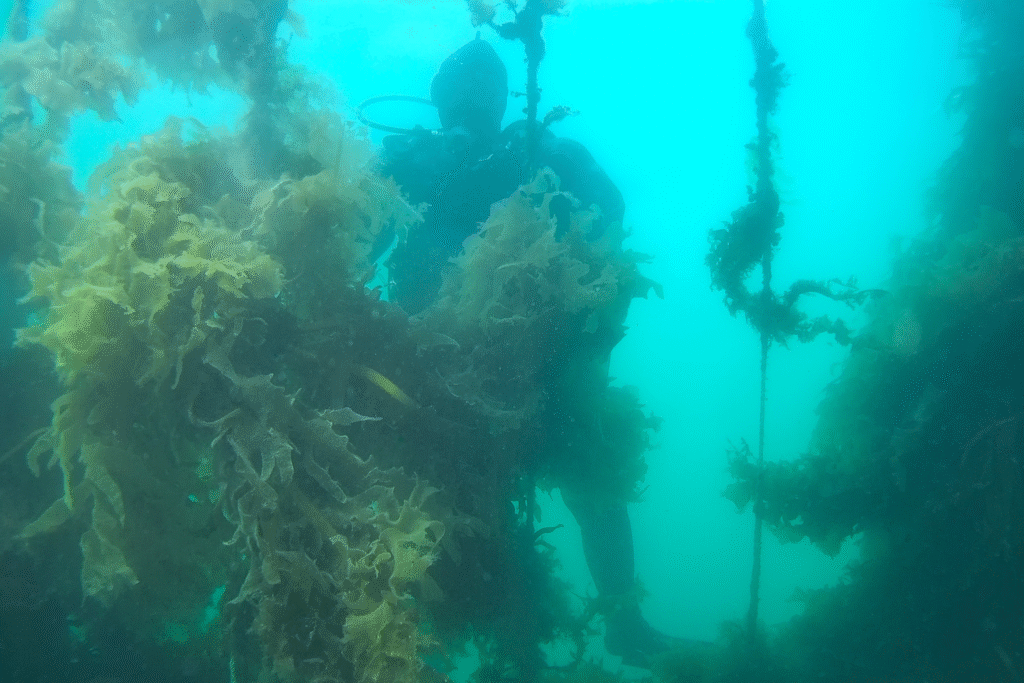
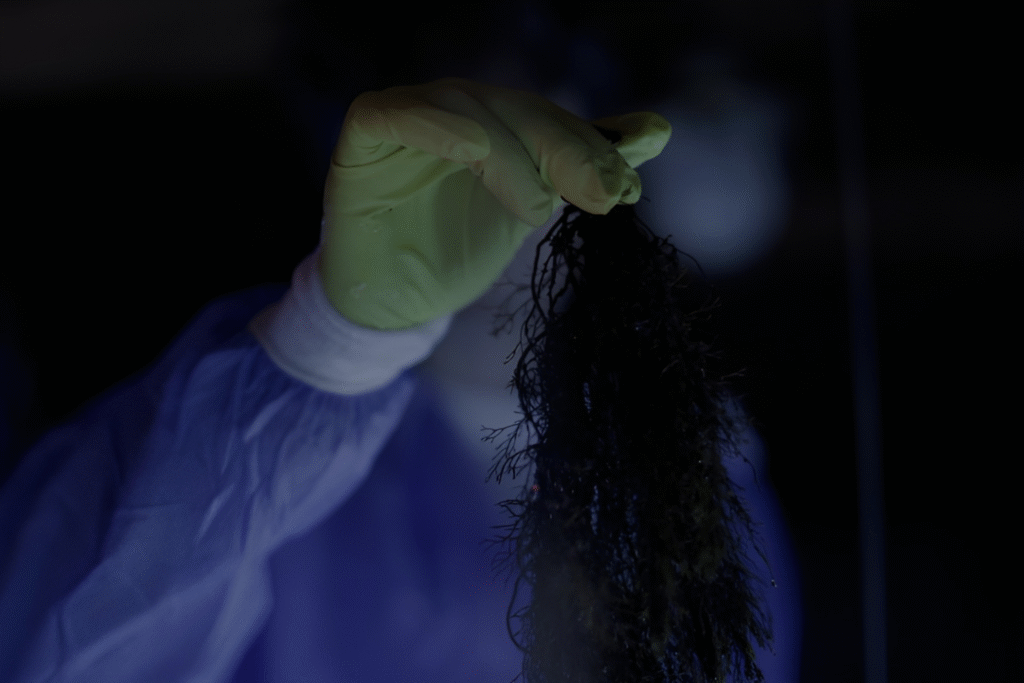
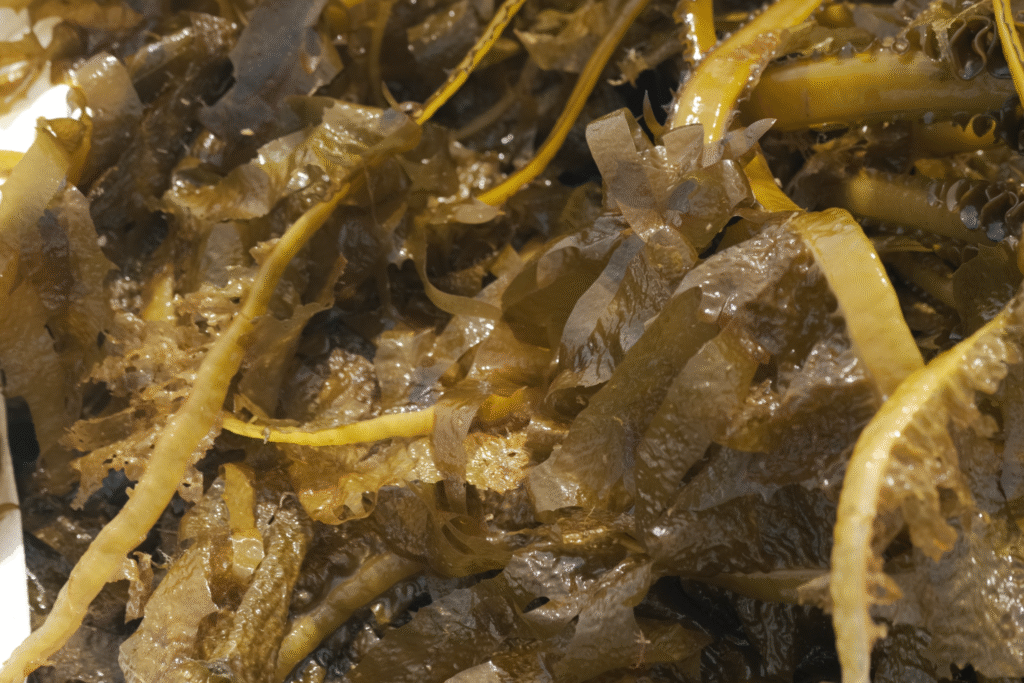
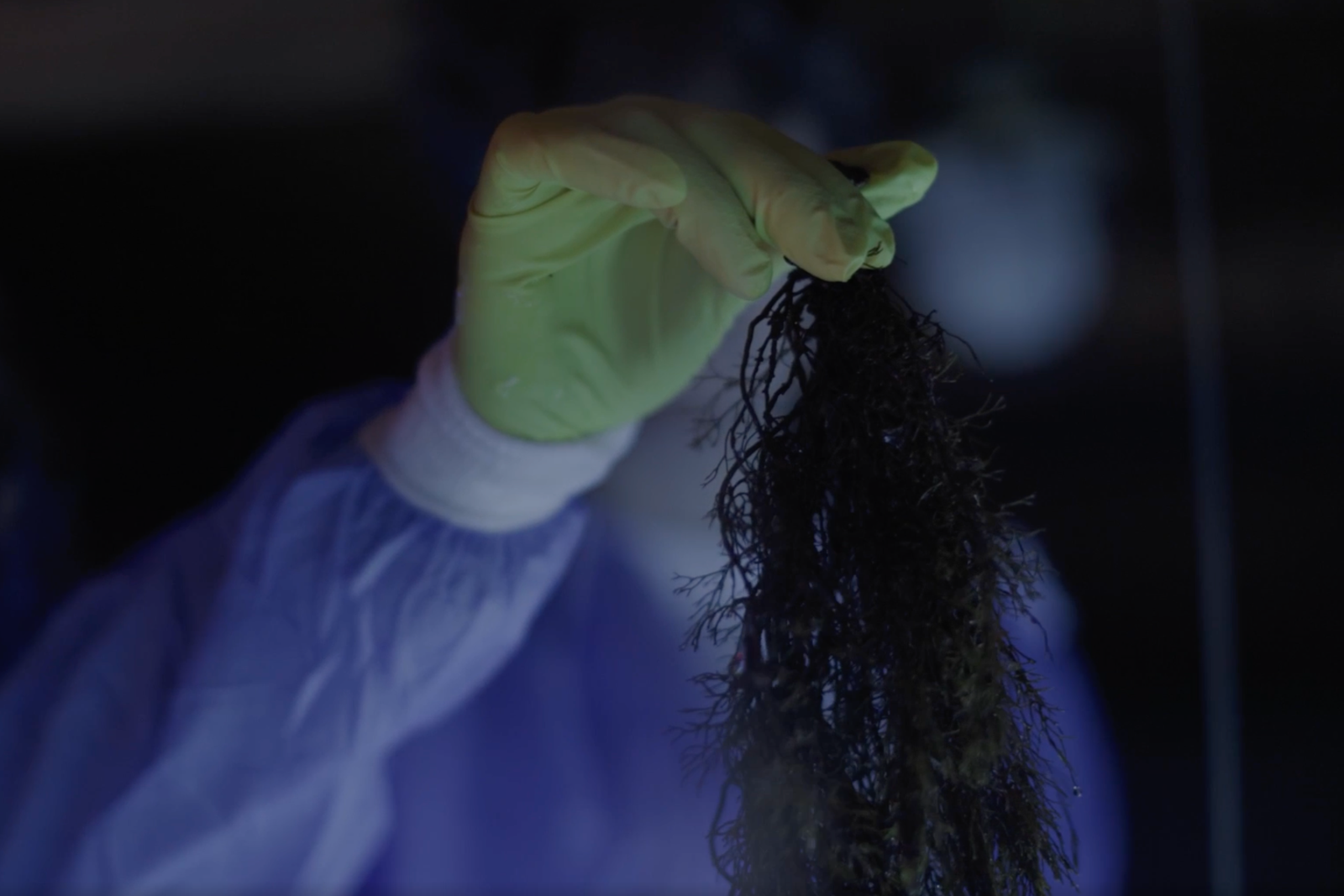
Undaria seaweed was cultivated in the Sea of Japan. The project team developed and tested the entire technological process: from cultivation to harvesting, transportation, and drying. The one-hectare experimental farm produced a high-quality harvest, 30% of which was transferred to the laboratory for further research and the development of new products (biopackaging, biofuel, and cosmetics).
However, the main achievement was not the economic result, but the environmental impact. The researchers deliberately left over 70% of the Undaria cultivated in the sea, leading to a natural increase in the abundance of this species in the wild, biodiversity, and bioproductivity of the sea. Thus, marine eco-farms became not just a pilot project but also a powerful tool for preserving the ecosystem of the Sea of Japan.
Climate impact: the small one-hectare experimental farm absorbed 360 tons of carbon dioxide. To put it into perspective, this is the equivalent of launching one Falcon 9 spaceship.
Black Sea Breakthrough: Innovation in Stormy Waters
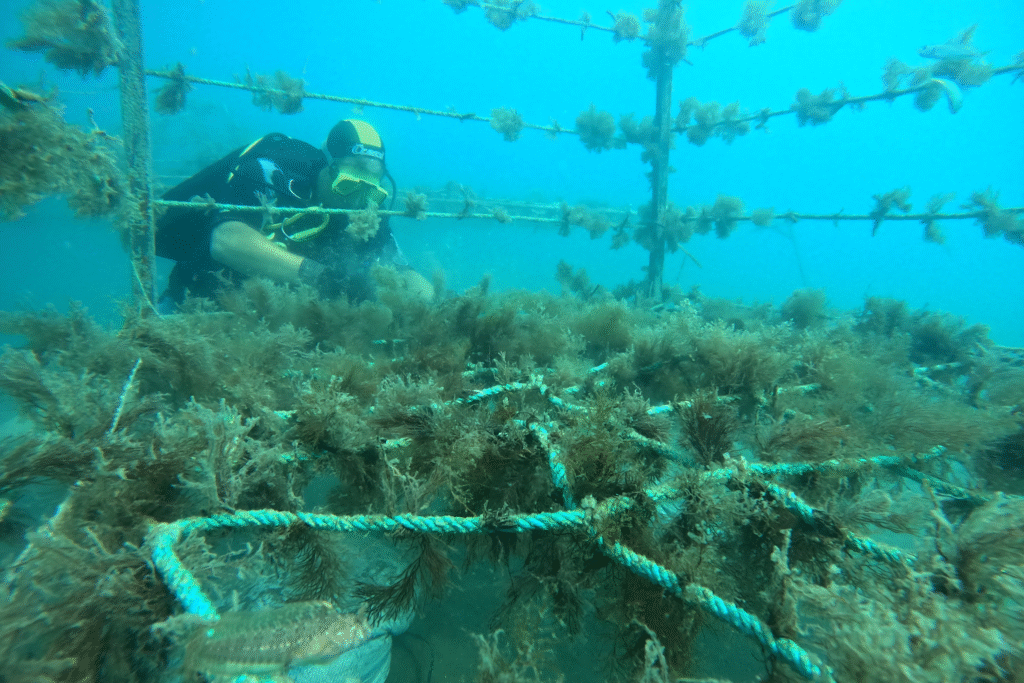
The Black Sea portion of the project proved even more ambitious. Researchers established four pilot farms for growing Cystoseira, another species of brown algae. This was the first time work of this scale and complexity had been undertaken, as the eastern Black Sea has a particularly challenging hydrological regime.
Two of the four farms represent a unique development by our scientists – storm-resistant structures that are planned for patenting. These innovative systems are capable of withstanding extreme weather conditions and can be adapted for use anywhere in the world’s oceans.
Beyond its primary goal, the Black Sea experiment yielded an unexpected discovery. Research into the impact of oil pollution on algae growth revealed that Cystoseira algae possesses a remarkable ability to absorb dissolved oil fractions from seawater. This discovery changes approaches to combating oil pollution near ports, terminals, and production platforms.
The farm structures were placed on deserted sandy areas of the seabed, which led to an expansion of the natural Cystoseira population. This resulted not only in increased biodiversity but also in improved water quality by removing excess organic matter and enriching it with oxygen.
The researchers developed concepts and roadmaps for processing the cultivated algae into various products: livestock feed additives, rapidly degradable bio-packaging, bio-fertilizers, and biofuels. Each of these areas represents a promising market with growing demand for environmentally friendly solutions.
Future Technologies: From the Lab to the Ocean
KELP FARMS has become a truly science-intensive enterprise. Throughout all stages of the project, ongoing consultations with leading research centers ensured a high level of biotechnological solutions.
The developed technologies have proven versatile and can be adapted to various marine environments. The team plans to scale up the project in the Black Sea off the coast of Turkey, in the Mediterranean and Caspian Seas, and in the Persian Gulf.
Global Perspectives and Social Impact
The project has received widespread international recognition. Over the two years of its implementation, it has been featured in over 110 media publications. The project’s results were presented at the UN COP29 climate conference in Baku, underscoring their significance for the global community.
Challenges and Solutions
The project faced a number of technical and logistical challenges. Growing algae in the open sea requires the creation of specialized structures capable of withstanding storms, currents, and other natural hazards. The team developed innovative engineering solutions tailored to the specific conditions of each water body.
These results demonstrate the viability of the marine ecofarm concept and pave the way for the creation of a new industry — the development of marine aquaculture for climate change.
Conclusion
KELP FARMS has demonstrated that the ocean can be a powerful ally in the fight against the climate crisis. Seaweed cultivation simultaneously addresses three key challenges: reducing atmospheric CO₂ concentrations, restoring marine biodiversity, and creating new economic opportunities.
Our experience demonstrates that even in challenging climatic and hydrological conditions, it is possible to create effective marine aquaculture systems. The technologies and knowledge gained can be scaled up for use in any region of the world, making marine eco-farms a global solution to a global problem.
At a time when traditional methods of combating climate change are proving insufficient, marine kelp farms are opening up new horizons. They represent more than just a technological solution, but a new paradigm for human interaction with the ocean — from exploitation to partnership in saving the planet.
The Black Sea disaster in December 2024, when two tankers lost large volumes of fuel oil as a result of a storm, led to the contamination of vast marine areas and caused severe damage to marine ecosystems due to petroleum pollution.
According to Oil Tanker Spill Statistics, six major spills (>700 tonnes) and four medium spills (7-700 tonnes) resulting from tanker incidents were recorded in 2024. The major spills primarily involved fuel oil and occurred in South America, Asia, and Europe. The total volume of oil released into the environment from tanker spills in 2024 was approximately 10,000 tonnes.
The scale of the impact of oil pollution on marine ecosystems is staggering: just one ton of oil spilled on the water surface creates a film covering an area of 12 square kilometers. This film blocks oxygen from entering the water, disrupts gas exchange with the atmosphere, and creates critical conditions for marine organisms.
Natural self-cleaning mechanisms
Nature has developed its own mechanisms to combat hydrocarbon pollution. The oceans are home to so-called oil-oxidizing microorganisms, capable of breaking down petroleum hydrocarbons and converting them into less toxic compounds. However, the intensity of modern pollution often exceeds the natural capabilities of these microorganisms.
Seaweed plays a key role in these processes. Scientists have long observed that algal beds can trap oil spills, acting as natural containment booms, and participate in the biological processing of pollution.
Studying the Black Sea Cystoseira
KELP FARMS conducted a detailed study of the ability of the brown alga Cystoseira barbata to resist oil pollution. Cystoseira was chosen deliberately – it is one of the most common macrophyte species in the Black Sea, forming extensive underwater forests in the coastal zone.
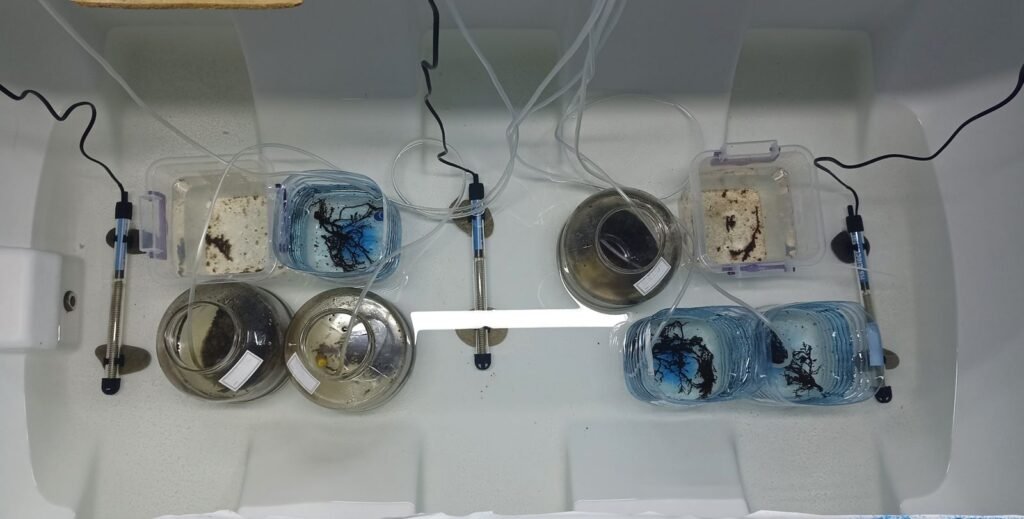
The experiment used actual samples of M-100 fuel oil collected on the Black Sea coast after the December 2024 disaster. The researchers created experimental conditions as close to real conditions as possible: seawater with a salinity of 19 ppm, a temperature of 20-26°C, continuous aeration, and lighting.
Experimental methodology
A mixture of sand and fuel oil was soaked in seawater for a week at 26°C to obtain a concentrated solution of oil fractions. Cystoseira branches weighing 10 to 19 grams were then added to the experimental containers. The control group was maintained in clean seawater with nutrients.
Every 10-11 days, the researchers collected water samples for gas chromatography analysis of oil product content. At the end of the month-long experiment, algal tissue and surface contaminants were also analyzed.
Study results
The obtained data were quite impressive. The initial concentration of dissolved petroleum products in the experimental water was 6.5-7.1 mg/L, exceeding the maximum permissible concentrations for seawater by 130-140 times. These conditions can be classified as «acute» toxicological.
During the first 11 days, the concentration of petroleum products remained virtually unchanged, due to the continued influx of dissolved fractions from the fuel oil. However, noticeable changes then began. On day 21, the concentration dropped to 2.24 mg/L (a 72% decrease from the initial values). On day 31, it dropped to 0.95 mg/L (an 81% decrease).
The total bioremediation volume amounted to approximately 52.65 mg of petroleum products over the entire experimental period. The most intensive purification processes occurred from days 11 to 21.
Accumulation of contaminants in algae tissue
From the results of the experiment, based on 1 kg of wet weight of Black Sea Cystoseira, it follows that the content of petroleum hydrocarbons in the surface pollution of algae is on average 11318 mg/kg of wet weight, the content of petroleum hydrocarbons in the tissues of algae is mg/kg of wet weight — 898 mg/kg of wet weight, which is approximately 8% of the amount of hydrocarbons in the surface pollution.
№
Content of petroleum hydrocarbons in surface contamination of algae, mg/kg of wet mass
Content of petroleum hydrocarbons in algae tissues mg/kg wet weight
1
22741
1035
2
2000
708
3
9213
951
Petroleum hydrocarbon content in surface contamination and Cystoseira alga tissue in an experiment
Thus, the resistance of Cystoseira to high concentrations of M-100 fuel oil, its ability to deposit significant quantities of toxic substances on its surface, and also to accumulate them in tissues was demonstrated.
Impact on the algae themselves
High concentrations of petroleum products had a noticeable impact on the condition of Cystoseira. After 11 days, a change in the algae’s color was observed – a darkening caused by the precipitation of colored fractions of the fuel oil. On the 21st day, structural damage began, manifested by fragmentation of the thalli.
Under control conditions (clean seawater), the algae showed a 14-35% increase in biomass, while under oil-polluted conditions, a weight loss of 12.8-39.1% was observed.
Mechanisms of interaction between algae and petroleum products
Physicochemical processes
The surface of algae cells consists of various functional groups—carboxyl and sulfate groups, as well as proteins, lipids, and polysaccharides. These components are capable of interacting with the hydrophobic molecules of petroleum hydrocarbons, ensuring their adsorption.
Brown algae contain alginate, which has good biosorption capacity.
Carbohydrates make up approximately 16% of the biomass of brown algae, which facilitates the effective binding of contaminants.
Biological mechanisms
The symbiosis between algae and oil-oxidizing bacteria plays a key role in petroleum refining. The developed surface of the algae serves as a substrate for specialized microorganisms that oxidize hydrocarbons and convert them into forms accessible to the algae.
The algae, in turn, provide the bacteria with oxygen during photosynthesis, increasing their oxidative activity. Some studies indicate that this symbiosis has a higher potential for the degradation of petroleum hydrocarbons.
Metabolic integration
Surprisingly, algae are able to incorporate some petroleum hydrocarbons into their metabolism. This explains why low concentrations of petroleum products can even stimulate the growth of some algae species. Metals contained in petroleum products (iron, manganese, and nickel), acting as micronutrients, also play a role.
Comparison with international data
The results obtained are in good agreement with international studies on the effectiveness of seaweeds in bioremediation. The specific bioremediation rate of Black Sea Cystoseira under the conditions of this toxicology experiment was 93.6-141.94 mcg/g/day, which is comparable to values for northern brown algae species in the Barents Sea (44.0-202.0 mcg/g/day).
For comparison, the brown algae Macrocystis pyrifera off the coast of Mexico is capable of extracting up to 112,000 mcg of gasoline per gram of dry weight from seawater, while Saccharina latissima in northern seas accumulates up to 10,740 mcg of petroleum products per gram.
Practical significance of the results
Natural bioremediation
The study results confirm the important role of natural algal communities in maintaining the ecological balance of coastal zones. According to the scientists’ calculations, one square meter of algal growth is capable of neutralizing the film formed by a 100 ml oil spill in this area within 4-5 days.
Prospects for technological application
The study opens up prospects for the creation of artificial biological treatment systems. It is proposed to use Cystoseira «booms» to combat fresh oil spills. This approach combines environmental safety with high efficiency.
A significant advantage of algae as biosorbents is their availability and renewable nature. Unlike artificial sorbents, algae do not require complex technological processing and can be effectively used even in dried form.
Ecosystem importance
These findings highlight the critical importance of preserving natural algal communities. Destroying even a portion of these communities can disrupt the natural self-purification mechanisms of marine ecosystems and reduce their resilience to anthropogenic pollution.
Limitations and research prospects
Despite the encouraging results, the study has certain limitations. The experiment was conducted in laboratory conditions with a limited water volume and controlled environmental parameters. Under natural conditions, bioremediation efficiency can be affected by currents, waves, temperature fluctuations, and other factors.
Long-term exposure to high concentrations of oil products (more than 10-11 days) resulted in the degradation and death of algae, limiting their use in large spills.
Further research is needed to study:
• Species-specific sorption properties of different algae
• Optimal conditions for the functioning of biosanitary plantations
• Long-term consequences of oil product accumulation in marine ecosystems
• Technologies for scaling up biological treatment methods
• Recycling of algae used for biosanitary purposes
Conclusion
The KELP FARMS study has provided the first detailed insight into the mechanisms and effectiveness of Black Sea Cystoseira in the bioremediation of oil spills. The data obtained confirm the high potential of seaweeds as natural biofilters and open up prospects for the development of environmentally friendly technologies for oil spill response.
These results are particularly relevant in light of the recent environmental disaster in the Black Sea and highlight the need for a comprehensive approach to protecting marine ecosystems, including both pollution prevention and maintaining natural self-purification mechanisms.
Algal communities are not only an important component of marine ecosystems but also a potential tool for environmental protection. Their conservation and study should be a priority in modern marine ecology and environmental policy.
Oil spills, marine pollution, and climate change have become global challenges, particularly acute in oil-producing regions. The Persian Gulf and coastal waters of Saudi Arabia, Kuwait, Qatar, and the UAE are areas with heavy concentrations of petroleum infrastructure, where any incident could trigger an environmental disaster. Nature itself may hold the solution: marine algae can cleanse water of petroleum products and absorb carbon dioxide on a massive scale. This has been demonstrated by scientists in various parts of the world’s oceans.
Seas under threat
The Persian Gulf serves as the heart of the global oil economy. Dozens of oil platforms, terminals, and ports are concentrated here, and the intensity of oil extraction and fuel exports makes the region’s ecosystem particularly vulnerable. Oil spills, wastewater discharges from drilling platforms, rising water temperatures, and marine ecosystem degradation have become systemic problems. Each new incident—from accidental oil spills to tanker disasters—threatens not only the environment but also the economies of nations whose prosperity depends directly on stable oil and gas exports.
The situation is compounded by the region’s expanding petroleum infrastructure: new platforms, terminals, and extraction zones create constant pressure on marine flora and fauna. Scientists note that without timely prevention measures and biological protection, the Persian Gulf’s ecosystems will struggle to survive.
The experiment: 82% cleanup in one month
This spring, the KELP FARMS team, an international project registered in Georgia, with support from international company Greenway Global (https://greenwayglobal.com/), conducted a laboratory experiment using brown algae Cystoseira. Under conditions where heavy fuel oil M100 concentrations exceeded normal levels by tens of times, petroleum product content in seawater decreased by 82% in just 31 days.
“We were surprised by the results ourselves,” says Oksana Vyalova, Senior Research Fellow at the Institute of Southern Seas Biology and PhD in Biological Sciences. “The algae not only precipitated oil pollution but also created an environment for bacteria that actively broke it down.”
The combination of algae and microorganisms forms a complete ecological complex capable of restoring the marine environment even after large-scale oil spills. The experimental results indicate that biosanitary algae farms could serve as an effective biological barrier in areas of chronic or emergency contamination. Such farms are particularly relevant for ports, oil platforms, and coastal terminals where the risk of petroleum spills is high.
How marine eco-farms work
Marine eco-farm technology is based on industrial-scale algae cultivation:
Seedling nets are anchored to ropes, with seedlings reaching operational size within 8 months.
Farm installation is possible along coastlines or near petroleum infrastructure using anchor systems.
Efficiency: Within a month, algae absorb pollutants at levels tens of times their own weight.
The key to such systems is prevention. During an emergency oil spill, the farm immediately absorbs contaminants and processes them over several weeks. The algae are then replaced with fresh seedlings, maintaining high cleanup efficiency year-round.
Marine biologists on the KELP FARMS team are prepared to develop projects for any region of the world’s oceans, selecting appropriate algae species and farm designs for specific conditions.
“Marine forests” and climate
The potential of algae extends far beyond local seawater cleanup. They could play a decisive role in combating global climate change.
“A hectare of marine forests absorbs up to 360 tons of CO₂ per year, while a hectare of terrestrial forest absorbs about 5 tons,” explains KELP FARMS founder Olga Lakustova. “This carbon can be sequestered, for example, in construction materials, or the algae can be processed into eco-friendly biofuel. We’re also working on creating biodegradable packaging from algae.”
Thus, marine eco-farms not only protect waters from oil but also become an effective decarbonization tool. For Middle Eastern countries, where sustainable development and carbon footprint reduction are becoming priorities, this opens new economic and environmental opportunities.
Economic benefits for oil-producing regions
Creating marine phytofarms is also financially advantageous:
Sustainable Aviation Fuel (SAF): Global demand is growing, and starting in 2025, airlines must use a minimum of 2% SAF as aircraft fuel. This creates a market worth millions of tons annually.
Carbon credits: By recording CO₂ absorption by marine farms, countries and companies can sell carbon units on international exchange markets. This represents a new revenue stream actively pursued by global corporations.
Agriculture: Algae processing by-products are converted into biochar—a fertilizer that increases agricultural land productivity.
ESG metrics: Implementing environmental technologies enhances companies’ investment attractiveness, reduces tax and environmental risks, improves reputation, and creates better conditions for international cooperation.
Climate marine projects deliver an IRR of 5.4% to 17%, providing stable returns over extended periods, making them attractive to conservative investors. Even under conservative models, projects can pay for themselves within 1.5–3 years, depending on carbon credit price volatility. Parallel sales of SAF or algae feedstock for its production can increase company profitability by 1.5–2 times. For Saudi Arabia, the UAE, and other regional countries investing in the “green economy” while seeking to maintain leadership in energy markets, such projects are becoming strategically vital.
Prospects for the Persian Gulf
Algae are more than just elements of marine ecosystems. They clean water of petroleum products, absorb carbon dioxide, help restore marine biodiversity and bioproductivity, and create new economic opportunities.
KELP FARMS is already implementing pilot projects in the Black Sea and Sea of Japan, and the technology is ready for scaling in the Persian Gulf. This region, which accounts for over 30% of global oil production, could gain an effective tool for protecting ecosystems from chronic spills while simultaneously creating a new revenue source. Marine eco-farms in the Middle East are becoming a symbol of the transition to sustainable development: from oil to “green” technologies.
Executive Director of the «Globus» Center for Environmental and Legal Initiative and co-founder of the Save the Caspian Sea environmental movement.
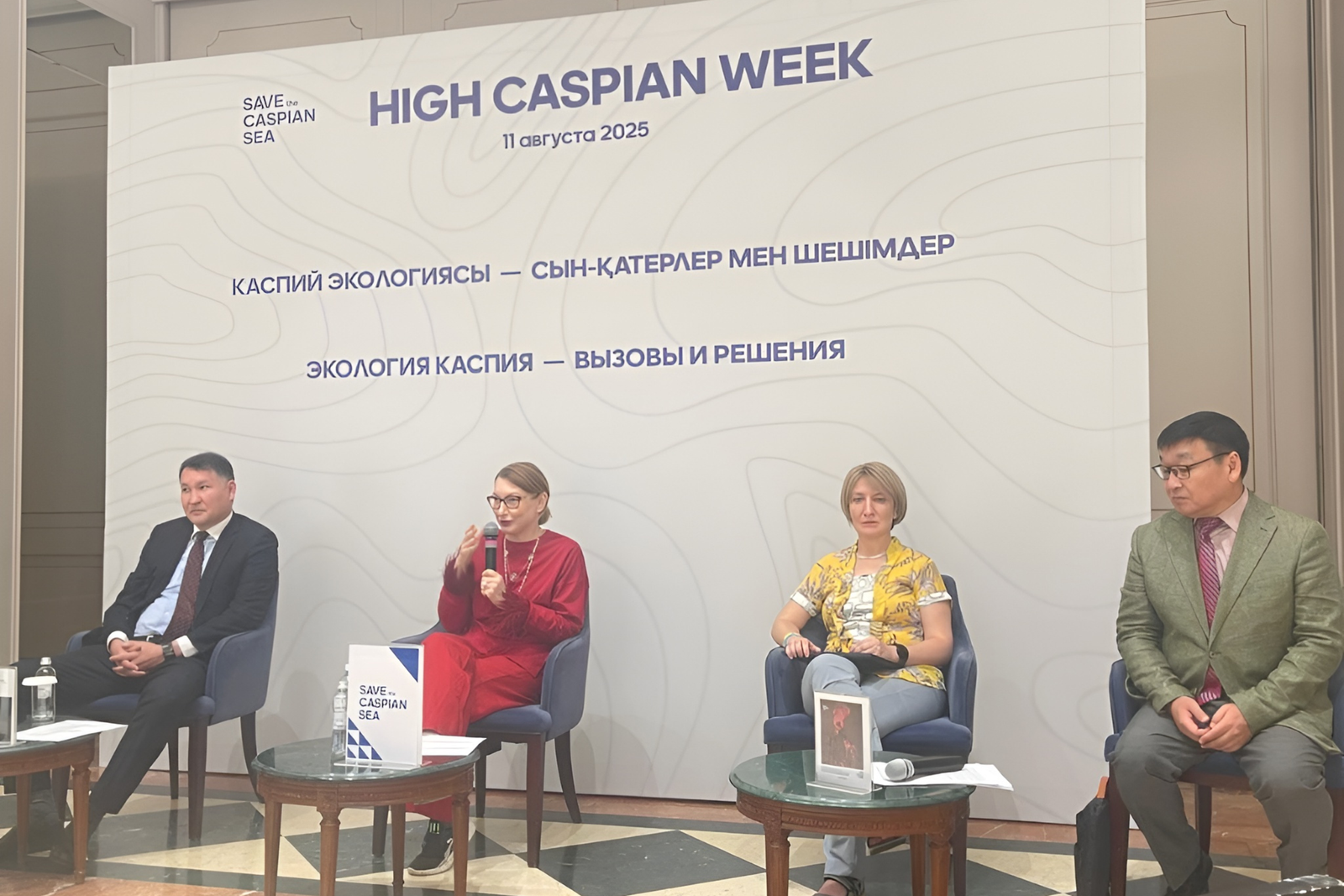
The Caspian Sea High Week took place in four cities across Kazakhstan, organized by the Save the Caspian Sea environmental movement. At one of the roundtables during this event, Olga Lakustova, creator of the KELP FARMS, presented her initiative. Galina Chernova, Executive Director of the «Globus» Center for Environmental and Legal Initiative and co-founder of the Save the Caspian Sea environmental movement, discusses the outcomes of the Caspian High Week and the region’s environmental challenges.
«Why was this High Week organized? The fact is that under the Tehran Convention, August 12 was declared Caspian Day, but unfortunately, this day has not gained widespread recognition or publicity, including in Kazakhstan. It hasn’t become a national day and was typically observed very locally. To increase awareness and popularization of this Day among our country’s population, we conceived the Caspian Sea High Week, which covered four cities at once—Atyrau, Aktau, Astana, and Almaty. We needed to bring Caspian issues to as many people as possible.»
— Did you succeed?
— Yes. We managed to hold conferences, photo exhibitions in four cities across Kazakhstan, documentary film screenings, and generate reaction and resonance. Of course, our organized media forum also delivered results: we achieved the maximum number of publications in mass media and internet resources in our country.
And finally, apparently as a result of our High Week, Caspian Sea issues were recently addressed at the meeting of heads of state from the Shanghai Cooperation Organization (SCO), where they were voiced by our President K.K. Tokayev. This means Caspian problems were raised at a very high interstate and intergovernmental level! It has now been decided to create a management center for Caspian Sea issues, and through it, at the SCO level, to address the challenges and threats facing the Caspian region and countries included in the Caspian Sea atlas today. This news is inspiring and sets an optimistic tone!
— A program to save the Caspian was also adopted at the conference, wasn’t it?
Absolutely correct. Prior to this, we, the founders of the international Save the Caspian Sea movement, traveled through the regions to gather proposals from local residents, opinion leaders, independent experts, and environmentalists, and formulated 10 steps to save the Caspian Sea. We presented these proposals during our conference in Astana and then submitted them as a finished document to the Kazakhstan government. This document was placed on President K.K. Tokayev’s desk. I think it was largely thanks to this document, developed through collective intelligence, that the SCO made this very important decision for us.
This program provides the foundation for developing a roadmap to save the Caspian Sea, including issues related to the Caspian’s shallowing—that is, addressing the problem of increasing water flows from rivers feeding into it (primarily the Volga and Ural rivers). We need to solve the problem of these rivers being over-regulated. While hydroelectric plants have been built on the Volga, and their reservoirs consume vast amounts of water, reservoirs were created on the Ural River to regulate water flows. Now hydraulic facilities and reservoirs are being built on the Ural for water accumulation, and we, living in the river’s lower reaches, may not receive the water volumes we need. And of course, the Caspian Sea doesn’t receive them either. The Volga provided 85% of water flow to the Caspian, the Ural about 3-5%, the entire Ural basin up to 12%, but now this water is practically absent—it’s not reaching the sea. This problem must be solved at the interstate level.
Next—organizing interstate monitoring of the Caspian Sea waters, especially in the Kazakhstani and Azerbaijani sectors, because the sea is effectively ‘blind’ today. No proper environmental monitoring is being conducted—comprehensive, in-depth monitoring with sample collection and research into water conditions and aquatic life. Shallowing levels should also be controlled and calculated not based on computer mathematical forecasts, but through actual measurements, long-term observation, and monitoring.
The Tehran Convention was adopted for the Caspian in 2003, but it remains a framework document—narrow in scope—since four protocols originally developed for this convention have still not been adopted and ratified by the Caspian region states. These protocols define mechanisms for Caspian research, biodiversity and fish fauna conservation, and addressing maritime incidents and Caspian water pollution from oil spills. These protocols still have no legal force, meaning the Tehran Convention effectively remains toothless and protects nothing in terms of ensuring sustainable Caspian development and preserving its ecosystem. The Tehran Convention’s title sounds very significant and impressive: ‘Framework Convention for the Protection of the Marine Environment of the Caspian Sea,’ but in reality, it protects nothing!
Additionally, we demand disclosure of PSA (Production Sharing Agreement) and JV (Joint Venture) contracts. The environmental components of these contracts remain undisclosed, and we don’t know exactly what standards and norms form their foundation, or why seals and sturgeon are being expelled from the sea, condemning themselves to certain death.
— These are contracts with subsoil users operating on the Caspian?
Yes, primarily with oil companies and consortiums currently developing massive oil deposits—both off the Azerbaijan’s coast and at Kazakhstan’s Kashagan, a huge oil field discovered in the northeastern part of the Caspian Sea. It ranks practically sixth in the world for oil reserves in target deposits. The NCOC consortium (North Caspian Operating Company) is now developing this Kashagan deposit and has effectively already destroyed sturgeon migration routes, their feeding grounds, and nursery areas. And in the ice near their artificially constructed islands in the Caspian waters, Caspian seal pups are born—the seal itself being endemic, found nowhere else in the world. This Kashagan oil field today poses a serious threat to preserving the Caspian Sea’s ecosystem and biota.
— Olga Lakustova, founder of KELP FARMS, participated in the conference. What impression did the presentation of this project make on you? Could it help the Caspian?
You know, the information presented was simply a revelation to me! Your company offers real steps and mechanisms for cleaning the Caspian Sea waters from oil spills and petroleum pollution. This is very important for us, because data from the Russian company ‘Transparent Caspian World,’ which conducts satellite research of the sea, shows that the sea is effectively uncontrolled by states today, and oil spills come primarily from ships and various vessels. Only a few ship owners actually deliver their waste, ballast water, and petroleum-contaminated water to port facilities—mostly everything is discharged into the sea. Therefore, it’s hard to overestimate the significance of your proposals and project for the Caspian Sea.
The only thing that raises questions: you currently work in the Black Sea basin, while the water composition (salinity, for example), biota composition, fish fauna, and overall biodiversity in the Black and Caspian seas are quite different. These are different ecosystems with different inhabitants. Therefore, I think you need to develop a pilot demonstration project and see how your algae will behave when introduced to Caspian Sea waters, and how effective and safe they will be there.
— This is a solvable challenge, since our team includes scientists who can develop projects for any sea, selecting both appropriate algae species and necessary farm designs. What do you think—would government and business representatives in Kazakhstan be interested in our project?
I believe so, yes. Port facilities could well be interested in this, as they currently face problems with falsified reporting on waste disposal, ballast water, and wastewater that vessels simply discharge into the sea in violation of Kazakhstan’s environmental legislation. I think subsoil users and industrial enterprises operating in Caspian waters would also be interested. Transportation companies and ship owners could also find this project appealing.
— Do you think it’s possible at all to restore the ecological balance in the Caspian Sea?
Yes, but a great deal needs to be done for this, especially considering the sea’s dramatic shallowing. The Caspian has natural cycles of regression and transgression. Regression is when the sea retreats into itself, exposing coastal areas, and now the seabed is being exposed much more rapidly than in previous years. This is linked to the overall reduction in water flow from rivers feeding into the Caspian, global warming, and changes in the rate at which water evaporated from water bodies returns as precipitation. So now, due to climate change, there’s a disruption in the natural cycle we all studied in geography class—the water cycle in nature.
Another reason is human impact, as enormous oil deposits are extracted from underground petroleum horizons, leaving voids behind. There’s suspicion that the Caspian seabed is settling to exactly this level, and with this seabed subsidence, the water surface level is also dropping.
Photo: Save the Caspian sea https://savethecaspiansea.com/
The causes of the Caspian’s dramatic shallowing are still poorly understood and need to be studied. The possibilities for ecosystem restoration will depend, among other things, on the transgression period, when the sea will again begin to mysteriously regain its former water volumes and spill onto coastal territories, filling them with water. It’s hard to say how the sea will behave in the future, but there are very serious forecasts that it will continue shallowing until 2054. This data comes from German and Dutch scientists, but they calculated all this based on mathematical models using computer programs, and whether one can ‘verify harmony with algebra’ is a question.
— But the situation is still reversible?
I think so, because the sea has existed since the Paleozoic era, when there was a huge Tethys Ocean that included the Black Sea basin, the Caspian and Aral seas—it was a unified system. At one time there was the Khazar transgression of the Caspian, when the sea lapped at the level of present-day Samara, and the Khvalynian transgression, when it reached the level of Uralsk city in Kazakhstan. Can you imagine? And this wasn’t so long ago! Well, and besides that, oil isn’t eternal—it will run out in about 40 years, and the sea will reclaim what’s its own. The main thing is to help it now. And KELP FARMS is one of the lifelines worth grasping to begin the process of cleaning the sea, primarily from oil pollution.
— How important is the Caspian for Kazakhstan? What is its significance?
First and foremost, from a geographical perspective, it’s a body of water in semi-desert zones with a very arid climate. On our territory, it essentially shapes the climate, providing breezes, moderating the climate by making it less arid and not so sharply continental—more temperate—bringing humidity and precipitation, and supporting the development of enormous biota. The Caspian is home to over 200 bird species that use wetlands for nesting and as transit corridors for subsequent migration to other parts of our planet, such as Southeast Asia, Indochina, Africa, and Siberia. The Caspian also plays a major role in precipitation formation in central Russia, as huge caravans of clouds move precisely there and pour down life-giving rain. This alone represents the invaluable significance of the Caspian Sea, including for the entire territory of the globe.
From the perspective of preserving fish fauna, our Caspian is a unique body of water: it’s home to relict sturgeon species—contemporaries of dinosaurs—the endemic Caspian seal, and another 64 commercially significant fish species. This water body is responsible for the region’s climatic well-being, for preserving biodiversity on planet Earth, and for maintaining unique biota and endemic species. To lose the Caspian would mean losing a unique ecosystem! This would cause a catastrophe of planetary scale. We’ve already lost the Aral Sea, and that’s a real catastrophe that occurred practically before the eyes of one generation in our country!
— Is the Aral lost permanently?
At least for the next fifty years it’s lost. Only a narrow strip of water surface remains in its northern part, and only because they managed to build a dam there that prevents water from flowing to the southern Aral, where there was a risk of complete evaporation. Why was it lost? Because two rivers that flowed into the Aral—the Syr Darya and Amu Darya—were used during Soviet times for growing rice and cotton. These are water-intensive crops, and the water from these rivers was essentially diverted to rice paddies and cotton field irrigation. If they restore the Aral’s water source by stopping the diversion of these rivers’ water to paddies and fields, the sea will fill up again, but so far there are no prerequisites for this.
For 30 years they’ve been dancing around the Aral Sea, ‘consuming’ so many grants supposedly for its salvation, but nothing has been done! And while on the Uzbek side of this territory some vegetation is being planted that’s more resistant to arid climate and salty dust that rises from the Aral’s bottom and essentially makes this desert lifeless, on the Kazakhstani side there are only empty projects and inconsequential discussions.
The fact that the Aral has now become a global catastrophe is evidenced by satellite images. Huge clouds of salty dust rise over this zone and spread, depending on wind patterns, either to the Pamirs and Tian Shan mountains, or are carried over long distances and settle in the Alps. Governments and scientists in these regions complain that glaciers are melting very rapidly (since salting ice makes it melt quickly), and glaciers there essentially aren’t accumulating their annual mass. Rivers in countries bordering the Pamirs and Tian Shan, as well as European countries adjacent to the Alps, are mainly replenished by glacial water. So here’s another reason why rivers aren’t achieving their annual water flow necessary to provide drinking water to peoples of countries that either directly border the Aral or suffer serious consequences from its disappearance, like many Western European countries. Thus, the Aral’s disappearance is indeed a planetary-scale catastrophe!
Applying this sad experience to the Caspian, it’s hard to imagine what this could all lead to. Five countries are part of the Caspian Sea atlas, and of course each is interested in keeping the sea alive, with a stable ecosystem and biodiversity capable of further development and able to provide these countries with prosperity, moderate climate, and reliable fisheries as the foundation of regional social stability.
— So international cooperation is important here: is it working?
Only two countries are part of the Aral Sea atlas, and even they couldn’t properly coordinate their actions to achieve positive results. Here we have five countries, and they’re pulling in different directions. Take Azerbaijan—there have been problems with Baku Bay for a long time, and this was even shown in Leonid Gaidai’s film ’12 Chairs.’ Remember how Father Fyodor emerges from the sea covered in oil that couldn’t be washed off? Even then, decisive measures should have been taken to clean the water not only in Baku Bay but throughout the Absheron Peninsula!
From the Russian side, as Roshydromet employees reported to us at the time, there were still 50 monitoring stations located in the North Caspian waters in the early 2000s. But they typically collected only climate data: water level, temperature data, wind direction, and so on. As for ecological stations—I don’t know if they exist there.
On Kazakhstan’s side, there are no ecological monitoring stations in Caspian Sea waters. Although we insisted that at least at the level of artificially constructed islands from which oil is extracted at the Kashagan field, primitive posts should be established that would conduct ecological monitoring and collect specifically environmental data.
Turkmenistan, until recently, paid no attention to the Caspian at all. Although due to the sea’s dramatic shallowing, according to scientists’ forecasts, the large lagoon-bay in western Turkmenistan, Kara-Bogaz-Gol, may cease to exist in the very near future. Regarding Iran—they have the South Caspian, the deepest part, but according to German and Dutch scientists’ forecasts, shallowing will also occur there, and many bays and inlets along the Iranian coast will undergo changes, while some will simply cease to exist.
As we can see, the challenges and threats related to the Caspian’s dramatic shallowing facing all Caspian region countries are quite serious, and they all must engage in this work promptly, substantively, and with the development of concrete actions. I hope that the center they plan to organize under SCO auspices will outline the consolidation of these efforts, collaboration, including the development of a joint and specific program to save the Caspian.
— What is the personal meaning of environmental activism for you? Why do you do this?
I am a person of faith, and therefore the phrase ‘God’s world’ is not empty words for me. The famous poet Fyodor Tyutchev once wrote wonderful verses about nature, reflecting its essence and mystery:
‘Not what you think, nature is: Not a cast, not a soulless face… There is a soul in it, there is freedom in it, There is love in it, there is language in it…’
Look at what beauty nature is filled with! Take even individual elements: air, wind, water—all of this is itself a mystery and enigma. And the earth that feeds us?! I consider it my duty, without lofty words, to simply defend this God’s world. I disagree with how it’s being destroyed to serve today’s wild market and business. This is unacceptable! How can one destroy the harmony of this world, its mystery, its grace? At least for me, this is simply impossible. If tomorrow forests, fields, meadows, air, water, clouds carrying moisture and coolness suddenly cease to exist, I’ll say: stop the planet, I’m getting off—I’m not going your way!
KELP FARMS team interviewed Mikhail Pletnev – a chemical technologist, Doctor of Chemical Sciences, and expert from the Russian Academy of Sciences.
Mikhail Pletnev headed departments at the Institute of Fine Chemical Technologies at RTU MIREA, Moscow State University of Fine Chemical Technologies named after M.V. Lomonosov, and Belgorod State University. He worked as editor of the international journal SOFW Journal, conducted research and development in two private companies and NPO «SynthesisPAV». He is the author of several monographs, textbooks, and implemented developments. In the 2000s, he became interested in producing biofuel and other products from algae and waste oil materials. His lecture course on this topic was published in 2011 on the website of the International Centre for Science and High Technology ICS-UNIDO.
How and why did you become interested in algae?
Everything started with biofuel: there was interest in developing biofuel technologies, initially mainly using plant and waste oil materials. There was demand for this in the 2000s. Back then, in 2007-08, many Russian companies bought my report on biodiesel, including the Nizhny Novgorod Oil and Fat Plant, EFKO Group, and several other companies. But in 2008, the crisis hit, and all this considerably declined. Although in many countries, interest in biofuel continues.
When I started working on this issue, I concluded that oil palm is the best food raw material for this purpose. It’s the most productive – a lot of palm oil is produced worldwide, so it’s quite difficult to compete with it. But the disadvantage is that it displaces tropical forests, which are the «lungs» of the planet, and like other oil crops, it grows on farmland. The more we use farmland for plant biomass intended for technical rather than food purposes, the worse it is – after all, there isn’t enough farmland. So we thought: why not try using algae, which actively produce triglycerides? Although these triglycerides are, of course, specific and somewhat different from those produced by land crops. Nevertheless, they are suitable for biofuel production.
There are algae (mainly microalgae) that produce up to 30-40% oils from their biomass, and this oil is suitable for biofuel production. Test batches were made, some airlines even made test flights using such algae biofuel, adding it to regular aviation kerosene. About ten species of hardy algae that actively produce oils have been identified.
At the same time, it became clear that biofuel is profitable to make when you also produce some high-tech expensive products for pharmaceuticals and cosmetics, food colorings, and bio-additives. These are products with high added value, so overall biomass processing becomes more profitable.
Active work began in the 1990s. Many companies were interested in this. All the largest biofuel producers are now in Europe and the USA. These include Finnish Neste, Shell Renewable Diesel, ADM and Renewable Energy Group. They are developing algae technologies and creating joint ventures with companies that specialize in growing algae.
For fuel production, you need quite high productivity and industrial bioreactors. Most often these are tubular bioreactors where continuous circulation occurs with adequate light and heat supply. Additionally, algae are grown in open pools and in coastal areas, in special enclosures where circulation happens simply under the sun. But here it’s harder to control temperature, and there’s no heating possibility. Such microalgae farms currently exist mainly in equatorial zones where water is consistently warm. If water temperature drops to 20-21°C at night, productivity decreases sharply, making algae biomass cultivation impractical.
How else can algae be used?
Different types of algae have been used for a long time. The oldest history is probably with the Japanese and Chinese, who widely consume them as food, like sea cabbage. Various ingredients are extracted from algae to produce food colorings and bioactive additives. But for technical needs, for producing biofuel or bioplastics, large-scale production is necessary. There are still no such large productions in the world, only experimental ones.
Do these technologies pay for themselves?
Let’s say they’re on the edge of profitability, but still can’t pay for themselves yet. It’s difficult to compete with oil and gas raw materials. On the other hand, there are large algae farms, for example in Hawaii, that grow raw materials for bio-additive production in quite large quantities. These are economically viable – it’s profitable.
There’s an algae called Botryococcus braunii. Besides producing triglycerides, it also produces unsaturated hydrocarbons in huge quantities – 50% or more of its own mass. As this hydrocarbon is produced, it floats up and swims on the ocean surface, even having a «kerosene» smell characteristic of unsaturated hydrocarbons. They can be directly processed into biofuel or used to extract hydrocarbons like squalene, which are used in pharmaceuticals and cosmetics production.
Let’s talk more about biofuel production. What can it be made from?
By the way, biodiesel fuel was first used by engineer Rudolf Diesel himself at the beginning of the last century: he took plant peanut oil and fueled the engine he designed and patented. Back then, oils were used directly.
Now biofuel is produced from rapeseed, sunflower, waste oils, and also from algae. The technology is roughly the same. When algae or plants reach sufficient oil content, everything is collected, concentrated, and algae are dehydrated. This mass is ground, crushed, and then oil extraction is performed. Oil is extracted with ordinary hydrocarbon solvent, dried, and transesterified with methanol. Oils and fats themselves are triglycerides of fatty acids, and they’re too heavy to be used directly as diesel fuel. To reduce molecular weight, a transesterification reaction is needed – interaction with methanol or other alcohol; this releases glycerin. Glycerin is also a commercial product. If properly purified, it becomes pharmaceutical-grade glycerin that can be used in organic synthesis and in cosmetics as a moisturizing agent.
Methyl esters of fatty acids are biodiesel fuel. European biodiesel is mainly based on rapeseed and sunflower, as well as waste oils. They also try making it from jatropha oil, but this is more in middle and southern regions. Jatropha is a high-productivity technical crop, good because it doesn’t compete with food production for farmland, as it can be grown on depleted soils.
Southeast Asia produces methyl esters of fatty acids from palm oil. This is the most productive land crop, difficult for oil rapeseed, soy, and sunflower to compete with. But palm still falls dozens of times behind microalgae in productivity. Microalgae produce oil literally in days: ten days, maximum two weeks – and you can already harvest. Rapeseed, for example, needs to be grown for three months!
How complex is the biofuel production process? Do investments in such production pay off?
This is still unprofitable and subsidized. These are high-tech processes still being developed, especially regarding next-generation biofuel (like NEXBTL). There are no large modern productions comparable in capacity to oil refineries yet.
Many productions can only pay off through crops that produce something more expensive, like food colorings and bio-additives. There are complex projects for oil production together with various bio-additives and pharmaceutical substances. Pharmaceuticals mainly use antioxidants, which can also be extracted from algae. They also produce fish and livestock feed with high protein and carbohydrate content – after extracting oils that go to biofuel.
Press cake can also be used as bio-fertilizer. There are also technologies for producing bioplastics (like polylactates and polyhydroxybutyrates) based on algae cultures. But all this is still not very developed – questions of competitiveness and production scaling arise. It’s one thing to grow algae in a small photobioreactor, another to scale this to large-tonnage process. The larger the production volume, the more profitable, the lower the unit production costs.
But besides profit, this is saving our planet, which is horribly polluted with plastic. And factories producing plastics release up to 400 million tons of CO2 into the atmosphere annually! Do you know cases where people, despite their own benefit, engaged in something that helps the environment?
Such projects exist, for example, used in complex treatment of domestic and industrial wastewater. Algae have been tried for absorbing atmospheric emissions from factories and power plants: carbon dioxide, soot, and other atmospheric pollutants can be directed to algae trays and bubbled through water. These emissions can actually serve as food for algae, for building biomass.
Additionally, power plant emissions are hot, so this solves the heating problem – you can regulate temperature so productivity doesn’t drop. Thus, emissions are cleaned while algae biomass grows, which can then be used to produce various useful things. Though you need to somehow separate heavy metals formed, for example, after burning coal. All other biomass is suitable for making products the market demands. Such technology has been used in Europe, USA, and Asia. These projects are still being implemented, as some enterprises are fined for excessive emissions, and this is exactly a solution to environmental problems: carbon dioxide and other pollutant emissions into the atmosphere are reduced, environmental conditions in the region improve. But this is a complex process requiring very expensive special equipment, and there’s no serial production of such equipment – it’s still custom production.
Regarding plastic household waste, that’s a separate topic. In developed countries, this problem is gradually being solved by implementing recycling technologies: 1) at the plastics and products manufacturing stage, using recycled plastic; 2) through separate collection of household waste in special containers with further plastic separation by types, grinding and cleaning at recycling plants, restoring commercial value; 3) through consumer education, starting from school. To reduce the flow of small plastic waste polluting the environment, EU countries now make plastic bottle caps and Tetra Pak bag caps non-detachable from containers, facilitating recycling. For unsorted and hard-to-identify plastic waste, pyrolysis and hydrocracking technologies are used, converting it to liquid fuel.
Can algae be used for wastewater treatment?
Algae have long been used in biochemical wastewater treatment. This is so-called «activated sludge,» which may include algae, but mainly consists of bacteria and fungi. This is a symbiosis of microorganisms capable of treating domestic and even industrial effluents, if they’re not too toxic for activated sludge. This also builds biomass, providing biological treatment and photochemical oxidation of water pollutants. The output water is cleaner, without pollutants.
Could biosanitary algae farms help here, for example, those same cystoseira that KELP FARMS works with?
Yes, at treated wastewater discharge points, you can certainly place algae farms and additionally clean water. I know such post-treatment systems exist using green and brown algae and microalgae, chlorella or spirulina, for example. All this is very developed in Japan and China. Several algae projects are developing in Spain. Generally, in using algae for bioremediation, biofuel production and other substances, Chinese lead in patents: about 70% of patents.
Which algae types are most suitable for cosmetics production, and what kind?
Based on algae farms existing in Japan, enzymes, omega-3 fatty acids, antioxidants, food colorings and other ingredients are produced. Since their sea isn’t very warm, Japanese created several algae farms in the Philippines. Perhaps the widest range of cosmetic ingredients and dietary supplements from algae is from Hawaiian company Cyanotech – Nutrex. It uses spirulina and Haematococcus pluvialis as producers.
Using ingredients extracted from algae, both therapeutic and regular cosmetics are produced: cosmetic creams, serums, lotions with antioxidant, nourishing and moisturizing functions, as well as bioactive anti-aging cosmetics. Cosmetic formulations often include carotenoids and tocopherols, and there are algae specialized in their production.
Say there’s an algae farm – what can be produced there, from start to finish, if used to maximum capacity?
We’ve already talked much about the oil component, good for biofuel production. It’s also known that algae oil is used to make natural cosmetic components like emulsifiers and emollients. The second component is polysaccharides, starch-like substances. By breaking them down, you can extract sugars and make natural sweeteners, sugar substitutes less caloric than sucrose.
These include cellulose components and various secondary components that algae produce as filters for self-protection from excessive sun: chlorophyll, red and yellow filters absorbing ultraviolet. These bioactive components are also used in cosmetics: as sun protection and for evening skin tone, reducing skin irritation and inflammation.
Natural dyes are expensive products: those used in cooking for decorating cakes and pastries. Some such dyes can probably color fabrics too: make something like cochineal – dye extracted from insects.
When we’ve separated all this, we have press cake that can go to organic fertilizers and feed premixes. After all, algae washed ashore after storms are collected and used as fertilizer. This is absolutely natural product containing no chemicals, causing no environmental harm. Such fertilizer is very nutritious for plants.
Additionally, remaining biomass can be dried, briquetted and used as fuel, much less harmful to the environment than fossil fuel, being renewable raw material that plants produce. Essentially, CO2 is closed in a cycle. Plants or algae again absorb it from atmosphere through photosynthesis, and this carbon dioxide goes to biomass production, which is burned in some way. This again produces CO2, which again participates in algae biomass photosynthesis – the carbon cycle closes. The same carbon dioxide circulates constantly, without worsening the greenhouse problem.
Aviation biofuel also significantly reduces CO2 emissions. If 20% biofuel is added to regular diesel fuel, this correspondingly reduces harmful emissions by about 20%. This is so-called sequestered carbon dioxide: through photosynthesis cycle, it returns to fields where it’s absorbed by oil crops. The carbon footprint from this biofuel is significantly smaller than from regular fossil fuel.
What’s the relevance of such ecological technologies in your opinion?
There’s obvious environmental benefit – reducing pollution and cutting greenhouse emissions. It’s one thing when the same antioxidant is obtained synthetically in 20 chemical stages – how many effluents, how much waste, how many atmospheric emissions! Here, through biosynthesis, antioxidant is produced in one simple stage – just break down obtained plant biomass into components and extract what’s needed. No new carbon dioxide is produced, the same CO2 circulates in atmosphere without replenishment from fossil fuels.
Global warming unfortunately doesn’t stop. It’s believed that by 2050 the atmosphere will become much more saturated with carbon dioxide, and world ocean and land will warm considerably. Some countries began actively pursuing environmental projects, but now due to unfavorable international situation, many such projects are postponed. This makes using ecological technologies, including those using algae, more important, at least where it’s possible to implement them.
The KELP FARMSteam interviewed Vadim Ni, a Kazakhstani ecologist, director of the Social-Environmental Foundation, lawyer, and environmental law specialist who participated in developing environmental legislation in the Republic of Kazakhstan.
The discussion covered environmental problems in the Caspian Sea, prospects for KELP FARMS development in Kazakhstan, and opportunities for cooperation between government, business, and civil society in environmental conservation.
The Social-Environmental Foundation is a non-profit, non-governmental organization established in 2007 to carry out activities in environmental protection and promote sustainable development in Kazakhstan and Central Asia.
KELP FARMS:Could you tell us about your organization’s main activities?
Vadim Ni: Our primary focus is supporting environmental campaigns, as well as information activities and youth outreach. Our current campaign is called «Save the Caspian Sea,» which includes working with local communities in the Caspian coastal cities of Atyrau and Aktau.
The Caspian Sea faces three major problems. First is its current shrinking. This is related to climate change, largely due to reduced flow from the Volga River, which previously provided 80-85% of the inflow to the Caspian Sea. We have now exceeded the record low level of minus 29 meters according to the Baltic system, and this is already visually apparent. In the Aktau area, this is visible through the retreat of the coastline, and in the Ural River delta near Atyrau, through the formation of new islands.
The second source of concern is pollution from oil companies and other industries, as well as from ships operating on the Volga and Caspian. Our latest finding: there are oil spills in the Caspian related to ships discharging ballast water without entering ports. This also leads to oil spills. The greatest threat comes from the presence of oil fields, as Kazakhstan conducts offshore oil extraction, particularly at the major Kashagan field.
The third problem is biodiversity loss. It’s evident that the Caspian has already lost its most iconic fauna species, such as sturgeon fish. There has also been a significant decline in the population of the endemic Caspian seal. These animals are dying en masse more and more frequently, and the causes are never fully determined. We believe the main reason is the declining ability of this population to cope with increasing pollution, including that related to oil extraction, the spread of pollutants, and hydrogen sulfide (Kazakhstani Caspian oil has high sulfur content).
Birds are also dying. We try to use scientific data whenever possible, but when it’s unavailable or questionable, reports from the population about mass deaths of both Caspian seals and birds become an important indicator. These animals physically suffer from flaring and pollution. Not all cases of animal and bird deaths are officially recorded: local authorities and oil companies try to remove them quickly. Residents often report discovering them, only to find they’ve disappeared from the site within a day or two.
We work on these three areas, involving local communities and the parliamentary body. We held discussions with the relevant committee of our parliament on Caspian pollution and implementation of the Tehran Convention for the Protection of the Marine Environment of the Caspian Sea. This convention came into force almost 20 years ago, in 2006, but no real results have been achieved yet. We try to create platforms for interstate dialogue. For all this to work, public pressure is necessary. We also pressure oil companies and other projects operating in the Caspian.
KELP FARMS and Marine Restoration
KELP FARMS:How do you view the idea of saving seas, including the Caspian, using sanitary farms of brown algae Cystoseira, as proposed by KELP FARMS?
Vadim Ni: This is certainly a promising idea. Oil pollution is currently a particularly acute problem for the Caspian, as we have to manage with our own resources here. We cannot call for outside help to quickly address oil spill problems. Countries’ capabilities are very limited. Such algae sanitary farms could be established as barriers around ports and oil platforms, solving these problems within relatively short timeframes.
KELP FARMS conducted research on cleaning seawater from fuel oil, and the results are very promising. However, more detailed and diverse research is needed to fully confirm this method’s effectiveness. There are global studies on other algae species, including invasive varieties that spread very rapidly. In the case of Cystoseira, it’s particularly advantageous that it’s a farm that can be removed at any time.
The second important aspect that needs investigation is the possibility of using carbon credits. Cystoseira algae lives only three to five years, so it cannot be considered a carbon sink like terrestrial forests. After completing its cycle, the algae absorbs a certain amount of carbon, but then as biomass decomposes, the carbon is released again. Therefore, it needs to be fixed in something. It makes sense to carefully study how feasible it is to use these algae, for example, as biofuel.
This has potential given that Kazakhstan’s water volume is limited, and algae are particularly good as a direction for reducing carbon emissions if converted to biofuel. Of course, there are many questions related to methodology availability, recognition of these methodologies, and possibilities for biofuel use. Complex projects require a serious approach to organizing the entire cycle.
KELP FARMS:So KELP FARMS could help Kazakhstan?
Vadim Ni: It could help if people and companies who have influence in this area are interested in it. That’s essentially what we do: we create company interest in finding solutions and undertaking their development. Of course, requirements for companies must be revised at the state level, then we can clearly present demands to them: if you emit greenhouse gases, please reduce these emissions; if you pollute the sea, then you must clean it.
Currently, they receive carbon quotas for free! In the next period, we plan to work on transitioning the system to paid greenhouse gas quotas. In this regard, we are more advanced than other post-Soviet countries: our quota system was created after Europe, Switzerland, and Norway. I developed this system myself, but since 2013, it hasn’t moved forward in terms of companies actually purchasing these quotas. In this case, they would have a choice: either buy quotas, which should have an appropriate price, or invest in carbon-reducing projects.
Environmental Advocacy Success Stories
KELP FARMS:Have you managed to influence Kazakhstan’s environmental situation in any way? Are there successful cases?
Vadim Ni: The Social-Environmental Foundation has managed to stop quite large projects. One was related to importing radioactive waste to Kazakhstan for burial—there was such an idea in the early 2000s. Not long ago, we stopped a project to develop our mountains, to build a ski resort, but now the government is returning to this issue again.
We constantly work with the Climate Policy Department of the Ministry of Ecology and Natural Resources of the Republic of Kazakhstan. We can advance certain things at the legislative level, but we cannot force companies to pay for quotas. Unfortunately, there is currently no political will to implement this system.
Regional Cooperation
KELP FARMS:Is there any cooperation between ecologists from different countries that share the Caspian?
Vadim Ni: So far, we’ve only managed this with Russians and Turkmens. That’s precisely why we want to hold a round table with experts from different countries in August this year.
Business and Environmental Responsibility
KELP FARMS:Why do you think people in general, especially business representatives, are so irresponsible toward the environment, as if they don’t think about the future at all?
Vadim Ni: I’m less familiar with the Russian system, but I know Azerbaijan, Kazakhstan, and Central Asia well. In recent years, there has been a process of protecting business from corruption. Indeed, inspectors used their powers for personal gain, including taking bribes. But on the other hand, this was an instrument of pressure on companies. Now they try to ensure that no one bothers business: they warn companies in advance that inspectors will come for inspection. If there’s no political signal that a certain large company needs to be held accountable, then usually no one touches them, because there are no conditions for it.
There’s no constant monitoring of their activities, and therefore no understanding of what can be demanded from a company. Therefore, we somewhat fill this gap in the inspection system by raising the question that oil spills exist, so why aren’t you doing anything? Naturally, they deflect. The Ministry of Ecology says that what appears on satellite images was «a shadow from something.» But this isn’t true, because modern satellite images allow for glare removal.
KELP FARMS:But why don’t business and government representatives think about this themselves? After all, if not they themselves, then their children and grandchildren will live in this world that they so thoughtlessly pollute!
Vadim Ni: They don’t want to take any measures because these are additional costs, and they need to recover their investments as quickly as possible. For example, for the Kashagan oil field, costs were initially high—after all, this is extraction under very harsh conditions. On the other hand, it’s no secret that these costs were inflated due to corruption.
Public Awareness and Engagement
KELP FARMS:What can be done specifically to change attitudes toward the problem? Are some government educational programs needed so people begin to understand that ecology is important, so the population itself demands environmental compliance from authorities? But the population doesn’t demand this either; they’re largely indifferent too.
Vadim Ni: No, that’s not true. Of course, it’s not the majority of the population, but there are people who do care. When we organize our campaigns, we usually raise a specific issue and then identify people who are ready to support this position and have influence in their community.
There aren’t very many of them yet, but gradually this circle is expanding. We constantly and quite actively receive appeals on various ecology-related issues.
Major Environmental Challenges
KELP FARMS:What are Kazakhstan’s most serious environmental problems, besides the Caspian?
Vadim Ni: The same mountain development in Almaty is planned at budget expense, among other funding. This is an economic project, but I see that it’s inappropriate (there’s an idea that Almaty could become a tourism center, but actually there are no basic conditions for tourism). There’s also urban pollution: more and more transport, and coal heating continues. Water is another issue, since we depend more than 50% on water inflow from other countries, and this inflow is decreasing. Rising temperatures also lead to increased water needs, and the population is growing. These are probably the most acute problems.
Effective Environmental Communication
KELP FARMS:How do you think environmental information should be presented? It seems many people are distant from these problems, simply don’t think about them. How can we reach them?
Vadim Ni: First and foremost, environmental information needs to be accessible and understandable. Scientists like to complicate it, making it incomprehensible to most of the population. Why is plastic pollution popular as an issue? Because it’s understandable. People constantly see this plastic themselves; they have piles of it at home. Environmental problems need to be connected to the lives of those people for whom this is truly a tangible threat. And of course, it’s very important to attract the attention of those who can voice these issues so their voice is heard and influential in the community. Finally, technical aspects: modern consumers watch more than they read, so this should be video rather than anything else.
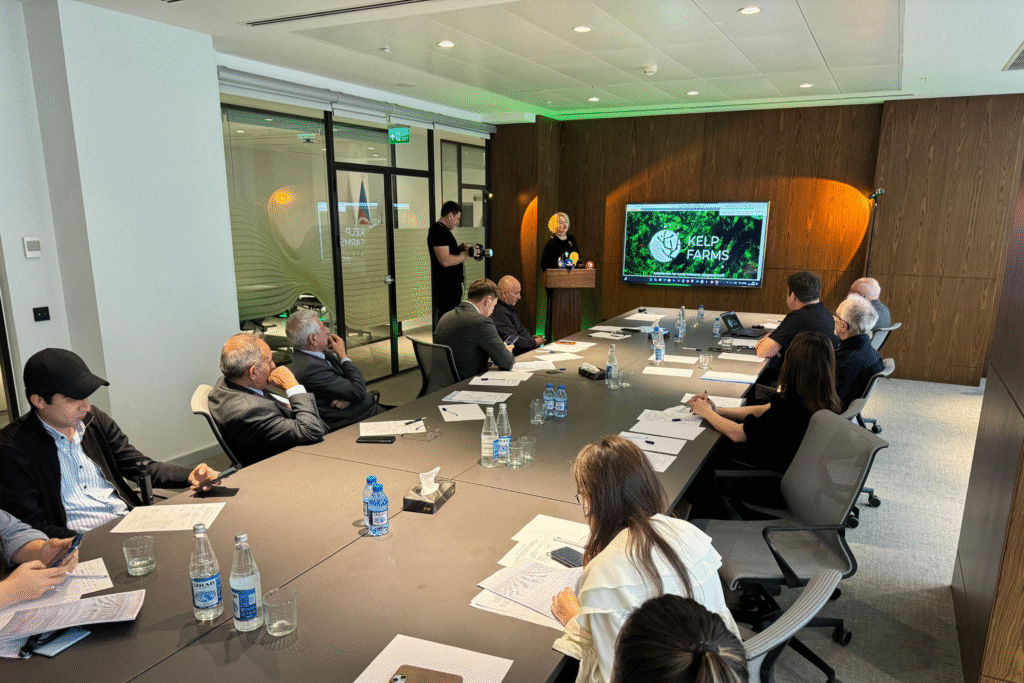
KELP FARMS experts presented an innovative solution to environmental problems at the International Scientific and Practical Conference «Caspian Ecosystem: Key Problems and Solutions».
The report «Marine Sanitary Farms as a Solution to Hydrocarbon and Oil Pollution» presented impressive research results:
One hectare of fucus algae can process a ton of spilled oil.
Experimentally proven: within 30 days, marine algae absorb up to 82% of oil fractions even when permissible concentration limits are exceeded by 60 times.
Economic efficiency: project payback period is 3-5 years with an internal rate of return up to 28%.
KELP FARMS proposes using decommissioned drilling platforms to create marine sanitary farms — this is a truly revolutionary approach to restoring the Caspian Sea ecosystem.
The second report «The Role of Marine Aquaculture in Developing New Economic Directions for Caspian Region Countries and Biodiversity Conservation» discussed organizing aquaculture farms to obtain useful raw materials from algae:
Worldwide, algae are used to produce construction materials, textiles, biofuel, fertilizers, animal feed, algae cardboard and algae plastic, and much more.
All of this can become new business development directions.
Algae aquaculture will not only preserve the species diversity of the Caspian Sea and increase its bioproductivity, but can also become a significant component of the economy for regional countries.
The KELP FARMS team proposed collaboration and expressed readiness to provide consulting, design, and organization of several marine farms in the Caspian.
However, along with microorganisms, algae play an important role in the ecological balance of marine ecosystems, and their participation in cleaning the sea from oil products is associated with both mechanical and biological processes. As a result of contact with oil products, algae can serve as “filters”, reducing the spread of oil on the water surface and trapping particles in the coastal zone. Scientific studies have shown that brown algae are able to absorb and retain oil and oil product particles on their surface due to the presence of mucous membranes and the complex structure of plant tissues. Some species of brown algae contain enzymes and metabolites capable of participating in the degradation of certain oil components.
It should also be pointed out that brown algae create an environment for the development of microorganisms on their surface, including oil-oxidizing bacteria, thus enhancing and accelerating the natural cleaning process. They stimulate the growth of oil-oxidizing bacteria through the enzymes and nutrients they secrete. Due to this property, brown algae are used in bioremediation measures, while increasing the contact area between petroleum products and microorganisms.
KELP FARMS conducted a scientific study on the role of brown alga Cystoseira in the uptake and deposition of M-100 fuel oil fractions in the Black Sea. An “acute” toxicological experiment with high concentration of oil pollution, 65-70 times higher than MAC, was conducted in laboratory conditions. Fuel oil collected on sandy beaches of Anapa city, the most affected by the accident spill, was used. It should be noted that fuel oil M-100 is a heavy oil fuel used in power engineering and shipping, containing high concentrations of heavy hydrocarbons and substances potentially harmful to the environment. In practice, there are no regulations for M-100 fuel oil, but there are MPCs for heavy hydrocarbon fractions that are part of M-100 fuel oil. For example, in sea water concentrations of such dissolved heavy petroleum hydrocarbons as C10-C40 should not exceed 0.1-0.5 mg/l.
During 30 days the condition of control samples of Cystoseira and plants in tanks with fuel oil was monitored.
Experimental setup
A noticeable decrease in petroleum hydrocarbon concentration was observed on day 21 and it continued till the end of the experiment. The results showed that the dissolved petroleum fractions content decreased by 82% in the tanks with fuel oil and cystosira.
Changes in the appearance and weight of Cystoseira branches were also observed during the study. After 11 days, a change in the coloration of algae in the experiment compared to control samples was recorded, and on 21 days the initial stages of destruction of plant branches were observed. In clean seawater, growth of Cystoseira was observed and the biomass increased from 14 to 35%, while oil pollution caused drastic weight loss of algae by 12.8, 27.1 and 39.1%.
Further chromatographic analysis showed that the maximum amount of petroleum hydrocarbons was deposited on the surface of Cystoseira branches. Our data confirmed the fact that brown algae are involved in cleaning the sea from petroleum products by their deposition and accumulation on their surfaces, but quantitative data were obtained for the first time. Deposition occurs due to the physicochemical properties of petroleum hydrocarbons, such as hydrophobicity, and also due to their interaction with the surface structures of aquatic plants. In some cases, petroleum hydrocarbons can form films or microscopic particles that settle on macrophyte branches.
Also, for the first time, data on the accumulation of petroleum hydrocarbons by Black Sea C. barbata were obtained. Algae absorb hydrocarbons dissolved in water through cell walls and membranes, heavy components can accumulate in tissues, causing damage at the cellular level. There are no precise threshold values for the content of petroleum hydrocarbons in brown algae tissues in the scientific literature, but it is indicated that the general levels of threshold concentrations for marine algae are in the range of 0.1-1 mg/g dry weight. Exceeding these values leads to toxic effects: reduction of growth and photosynthesis, and damage to cellular structures.
Our results showed that Cystoseira accumulates 20-30 times less toxic oil substances, but even this concentration leads to destruction of the algae structure.
Obviously, we should say that the Cystoseira complex — a symbiosis of Cystoseira and oil-oxidizing microorganisms that settle on its surface — is involved in the rapid decomposition of petroleum hydrocarbons in water. These bacteria are always present on seaweeds in undetectable amounts. However, when oil pollution appears, these organisms begin to rapidly increase their numbers and begin to purify seawater.
Thus, the ability of the brown alga C. barbata to precipitate significant amounts of oil pollution on its surface and accumulate some dissolved fractions in the structural elements of thalloms was shown. The fact of reduction of oil products content up to 82% from the values exceeding MAC in 65-70 times, recorded by us, indicates that natural populations of Cystoseira and specially grown Cystoseira “forests” can really be considered as a way to quickly clean seawater in areas potentially exposed to both permanent and accidental oil pollution.
KELP FARMS has developed technologies for growing Cystoseira on artificial substrates, which can be placed in the waters of seaports, near oil terminals, on offshore oil production platforms, etc.
After the tanker disaster, our scientists at the Black Sea laboratory conducted a unique experiment that could change the approach to combating oil pollution.
What did we discover? Under laboratory conditions, cystoseira reduced petroleum product concentrations by 82% even with pollution levels exceeding permissible standards by 65-70 times! This algae not only traps oil on its surface, but also creates an ideal environment for microorganisms that process it.
Conclusion: The brown algae cystoseira (Cystoseira barbata), which grows along our shores, has proven to be a true natural filter against oil pollution!
How does it work? Cystoseira uses two purification mechanisms:
> Physical: deposits oil particles on its surface
> Biological: creates a «home» for oil-oxidizing bacteria
For the first time, we obtained precise data on how much petroleum products this algae can retain!
Future prospects Our research opens new possibilities for environmentally friendly methods of combating oil spills! Artificially cultivated cystoseira «forests» could become a natural barrier in zones of potential contamination. Unfortunately, the algae itself suffers from the toxic effects of oil — we observed changes in its coloration and weight loss of up to 39%. Therefore, it’s crucial not only to use natural purification mechanisms, but also to prevent disasters!
Our mission continues! We at KELP FARMS are convinced: nature has already created many solutions to environmental problems. Our task is to study, support, and enhance these natural mechanisms!
We have a lot of work ahead: publishing scientific articles, testing our successful experience in the Caspian Sea, creating new eco-farms for algae cultivation, and much more.
KELP FARMS proudly presents you with a unique opportunity to purchase premium brown seaweed Undaria pinnatifida (Wakame), cultivated in the pristine waters of the Sea of Japan.
We are pioneers in the industrial cultivation of Undaria in the Sea of Japan, whose success has been recognized and supported by the international company Greenway Global. This confirms the high quality and compliance of our products with global standards.
The global seafood market demonstrates a steady growth of interest in seaweed. Undaria (Wakame) is gaining popularity among health-conscious consumers due to its unique properties: • High content of vitamins and minerals • Rich source of omega-3 fatty acids • Powerful antioxidants • Globally recognized superfood
For the 2025 season, we are ready to offer you: • Supply volume: 70 tons of raw mass • Harvest period: May-June 2025 • Supply forms (customer’s choice): — Freshly harvested raw product — Frozen product — Dried product
ENVIRONMENTAL VALUE By purchasing our products, you not only receive a high-quality superfood but also contribute to the development of environmentally sustainable business, support biodiversity conservation, and participate in the global climate agenda.