Studying algae resistance to oil pollution

KELP FARMS CONDUCTS RESEARCH ON RESISTANCE OF BROWN ALGAE CYSTOSEIRA TO OIL POLLUTION FOLLOWING ECOLOGICAL DISASTER IN THE BLACK SEA

Recent catastrophic events in the northeastern part of the Black Sea continue to negatively impact all living organisms. Oil slicks of fuel oil are washed ashore daily, covering the seabed, inhabitants, and plants that lead an attached lifestyle. The disaster has led to serious pollution, the scale and consequences of which are still difficult to assess.

Environmental specialists are monitoring the situation in the coastal area of the sea, but equally important are studies that model acute events of fuel oil pollution in laboratory conditions. In experimental conditions, it is possible to set and maintain high concentrations of toxic substances and observe changes in the state of marine living objects. Such work is currently being conducted by KELP FARMS specialists in a biological laboratory.

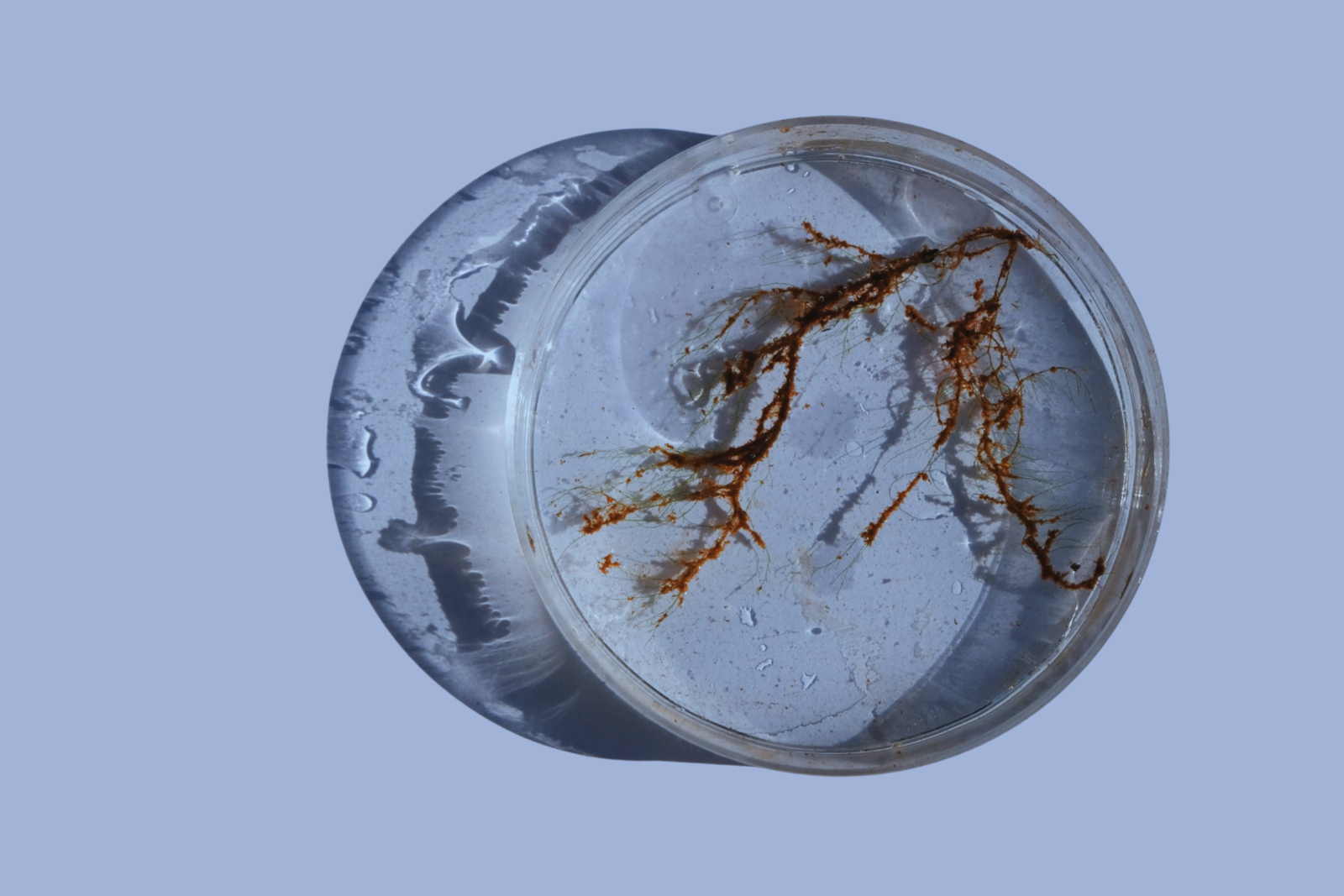
The research subject is a common species of brown algae in the Black Sea — Cystoseira. This is a rather large and lush algae that can reach about a meter in height. Due to its size and spreading form, Cystoseira serves as a «home» for millions of organisms. These include not only various small crustaceans (crabs, small crustaceans, shrimp), worms, and mollusks, but also many fish. In the thickets of Cystoseira, animals hide from predators, live, reproduce, and find food. Additionally, Cystoseira is a valuable raw material for pharmacology.

Knowledge gained from these experiments will help predict the existence and condition of the natural Cystoseira population in areas affected by oil disasters. For 2 weeks already, algae bushes have been in water with a high concentration of fuel oil; for comparison, we are also observing the condition of plants in clean seawater. There are already initial visual results — oil pollution causes a change in Cystoseira’s color to a darker shade, plants are in a depressed state but remain viable.

The scientific work will continue for several more weeks, after which the algae will be analyzed in a specialized biochemical laboratory to assess their condition and the level of accumulation of heavy petroleum products. This will allow evaluation of the level of resistance to oil pollution of this important species of brown algae for the Black Sea.
KELP FARMS: A Revolutionary Solution for the Black Sea Crisis

In the wake of a devastating fuel oil spill in the Black Sea, our project’s environmental significance has reached unprecedented levels. The potential long-term impact on the marine ecosystem could be catastrophic, making immediate action crucial.

The crisis began in mid-December when severe weather conditions in the Kerch Strait led to the wreckage of two oil tankers. The resulting spill released thousands of tons of fuel oil into the sea, contaminating the coastline from Crimea to Georgia. In response to this disaster, we’re leveraging seaweed’s remarkable natural properties to combat oil pollution.

Seaweed’s Triple-Action Defense System:

First, it establishes powerful natural barriers that contain oil spills. By strategically planting seaweed in high-risk areas, we create biological filtration systems that effectively isolate contaminated zones and prevent further spread. This approach complements traditional mechanical cleaning methods, enhancing overall effectiveness.

Second, seaweed provides an optimal substrate for beneficial microorganisms. Our research demonstrates that when seaweed serves as a growth medium for microalgae and oil-degrading bacteria, the rate of oil decomposition accelerates by up to 100 times.

Third, it facilitates ecosystem restoration. Through its natural processes of carbon dioxide absorption and oxygen production, seaweed creates protective habitats for marine life, accelerating the recovery of oil-damaged environments.

Environmental Benefits:

The project delivers multiple environmental advantages. Like terrestrial plants, seaweed acts as a powerful carbon sink, helping combat climate change through greenhouse gas reduction. Our seaweed farms recreate vital «underwater forests» that serve as nurseries and feeding grounds for diverse marine species, from tiny shrimp to sea otters and seals.

Furthermore, seaweed offers sustainable alternatives to environmentally harmful products. It can be processed into biofuel, organic fertilizers, and eco-friendly packaging materials, reducing our dependence on plastic. The farms also improve water quality while protecting wild seaweed populations from over-harvesting.

Immediate Action Plan:

The current crisis demands swift implementation of seaweed’s unique properties to mitigate the Black Sea disaster. Our expansion strategy focuses on three key areas:

  • Establishing additional eco-farms;
  • Constructing extensive artificial seaweed barriers;
  • Enhancing our research bio-laboratory capabilities.

Through these initiatives, KELP FARMS is positioned to make a significant impact on both the immediate crisis and long-term marine ecosystem health.

Results of the Climate Conference in Baku

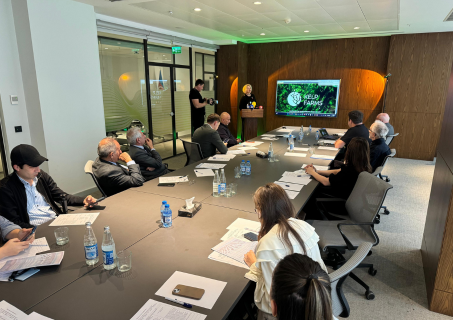
Olga Lakustova, creator of KELP FARMS, presented the company’s results at the climate conference in Baku.

On November 5 in Baku, ahead of the «Year of Solidarity for a Green World» and the 29th session of the UN Framework Convention on Climate Change Conference of Parties (COP29), an international conference was held on the topic «How to Save the Caspian Sea in the Face of Climate Change?»

The main goal of the press conference was to inform the scientific community and other stakeholders about opportunities to minimize damage caused by climate change to the Caspian Sea ecosystem.

The scientific consultant of KELP FARMS, Ph.D., Konstantin Zgurovsky, presented a report on «Key approaches to the cultivation and restoration of macrophytic algae to address global climate and regional challenges, restore biodiversity and develop a sustainable economy in the Caspian Sea».

KELP FARMS creator Olga Lakustova discussed the development strategy, modern use of Sustainable Development Solutions Network (SDSN) mechanisms in seaweed cultivation, successful experience in growing Undaria seaweed in the Sea of Japan, and a pilot project with Cystoseira seaweed in the Black Sea.

Andrey Shavnev, project manager at «Greenway Global (GwG) ESG,» noted that the company considers participation in seaweed cultivation projects relevant and sees a sustainable future for the entire planet in such complex scientific projects.

The ecological situation in the Caspian Sea is in critical condition. KELP FARMS technology can improve water quality, promote biodiversity increase, reduce carbon dioxide concentration, and ensure sustainable development of the marine ecosystem using special seaweed cultivation technology and placement of seaweed farms in the coastal zones of the Caspian Sea.

KELP FARMS: Seaweed Cultivation for a Sustainable Future

KELP FARMS is integrated international company for the cultivation and sale of seaweed and carbon units.

We are at the forefront of the booming seaweed industry, offering a ready-made business solution for the cultivation of seaweed for marine plot owners and seaweed farmers in various regions. Our mission is to unite a global community for maximizing profits while actively combating climate change.

The global seaweed market is projected to reach $38 billion by 2028, growing at an impressive 10% annually. This trend spans multiple industries, including food, cosmetics, medicine, pharmaceutical industry and biofuel production.

In line with the European Strategy on Invasive and Alien species, we are creating a nursery for native species of seaweed in the Black Sea. We selected promising species for cultivation. This technology is going to be extended to the Mediterranean Sea as well.

KELP FARMS is more than just a business. It is a movement towards sustainable marine agriculture and climate action. By restoring seaweed «forests”, we are not only creating profitable opportunities but also preserving marine biodiversity. 

Join us in shaping a sustainable future where profitable business and environmental stewardship go hand in hand. Start following us in Facebook and Instagram to get any updates and to see our progress! 

312