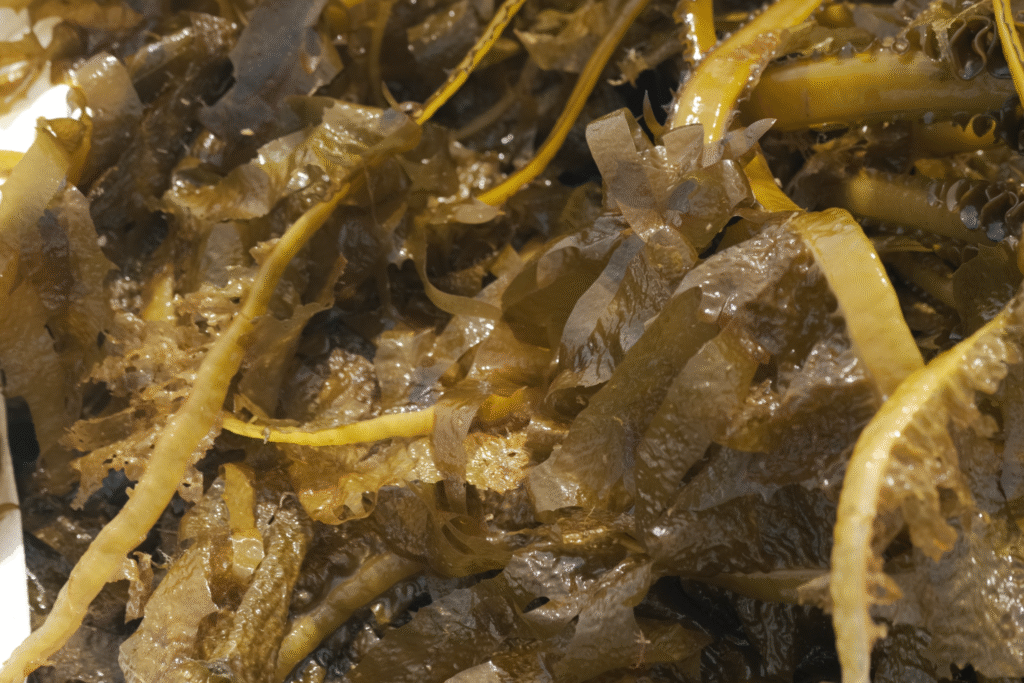
KELP FARMS: how algae is saving us from the climate crisis
The cultivation of brown seaweed has proven for the first time the economic viability of marine aquaculture and opened up new opportunities for restoring marine ecosystems.
Amid the growing climate crisis, humanity is seeking new ways to reduce its carbon footprint and restore natural ecosystems. One of the most promising areas is the cultivation of seaweed — plants capable of absorbing enormous amounts of carbon dioxide while simultaneously restoring ocean biodiversity.
KELP FARMS has pioneered research in the field of brown seaweed cultivation.
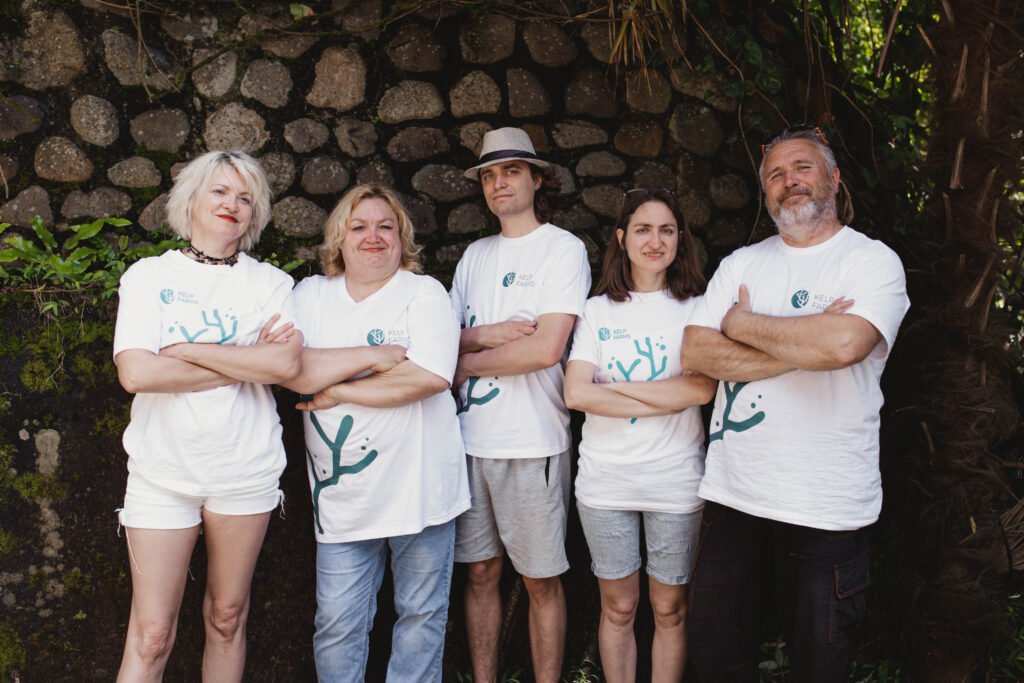
Revolution in the Sea of Japan: Undaria Seaweed
Undaria seaweed was cultivated in the Sea of Japan. The project team developed and tested the entire technological process: from cultivation to harvesting, transportation, and drying. The one-hectare experimental farm produced a high-quality harvest, 30% of which was transferred to the laboratory for further research and the development of new products (biopackaging, biofuel, and cosmetics).
However, the main achievement was not the economic result, but the environmental impact. The researchers deliberately left over 70% of the Undaria cultivated in the sea, leading to a natural increase in the abundance of this species in the wild, biodiversity, and bioproductivity of the sea. Thus, marine eco-farms became not just a pilot project but also a powerful tool for preserving the ecosystem of the Sea of Japan.
Climate impact: the small one-hectare experimental farm absorbed 360 tons of carbon dioxide. To put it into perspective, this is the equivalent of launching one Falcon 9 spaceship.
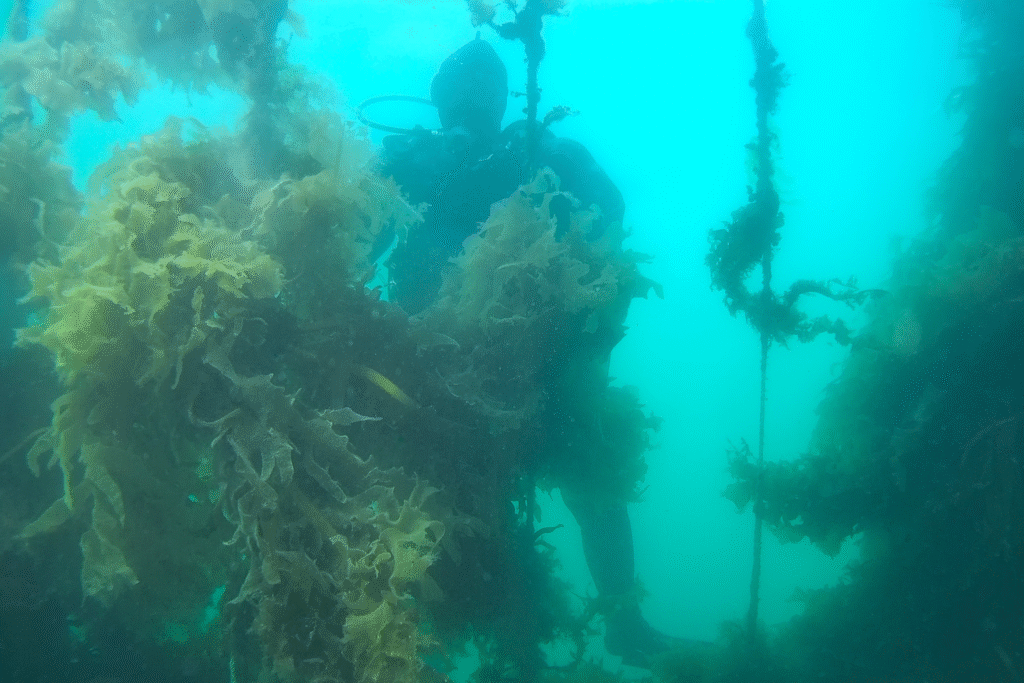
Black Sea Breakthrough: Innovation in Stormy Waters
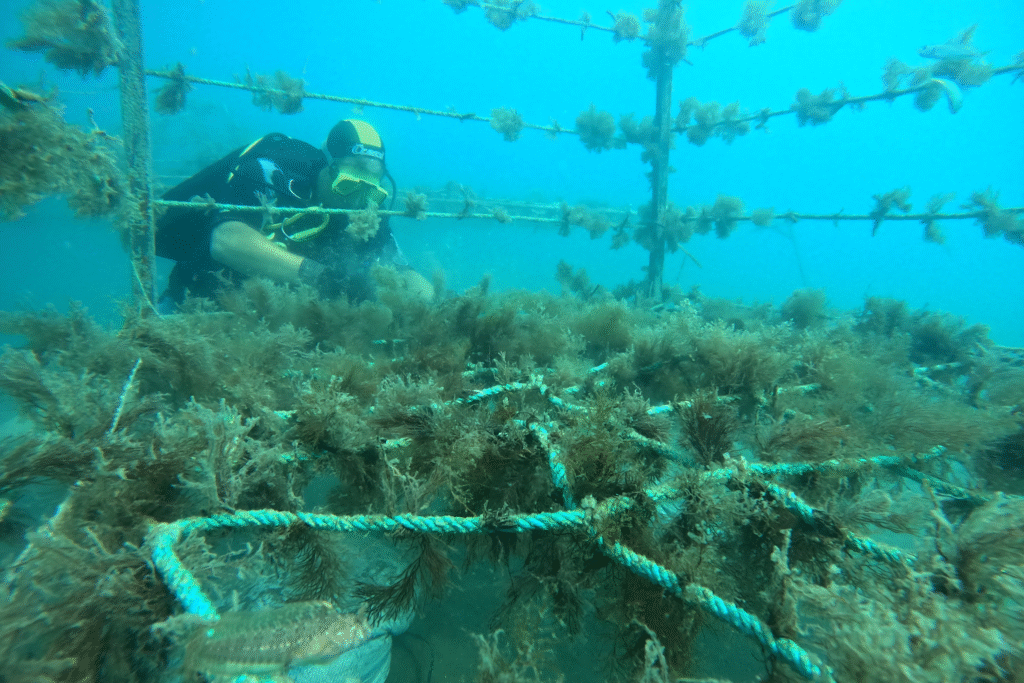
The Black Sea portion of the project proved even more ambitious. Researchers established four pilot farms for growing Cystoseira, another species of brown algae. This was the first time work of this scale and complexity had been undertaken, as the eastern Black Sea has a particularly challenging hydrological regime.
Two of the four farms represent a unique development by our scientists – storm-resistant structures that are planned for patenting. These innovative systems are capable of withstanding extreme weather conditions and can be adapted for use anywhere in the world’s oceans.
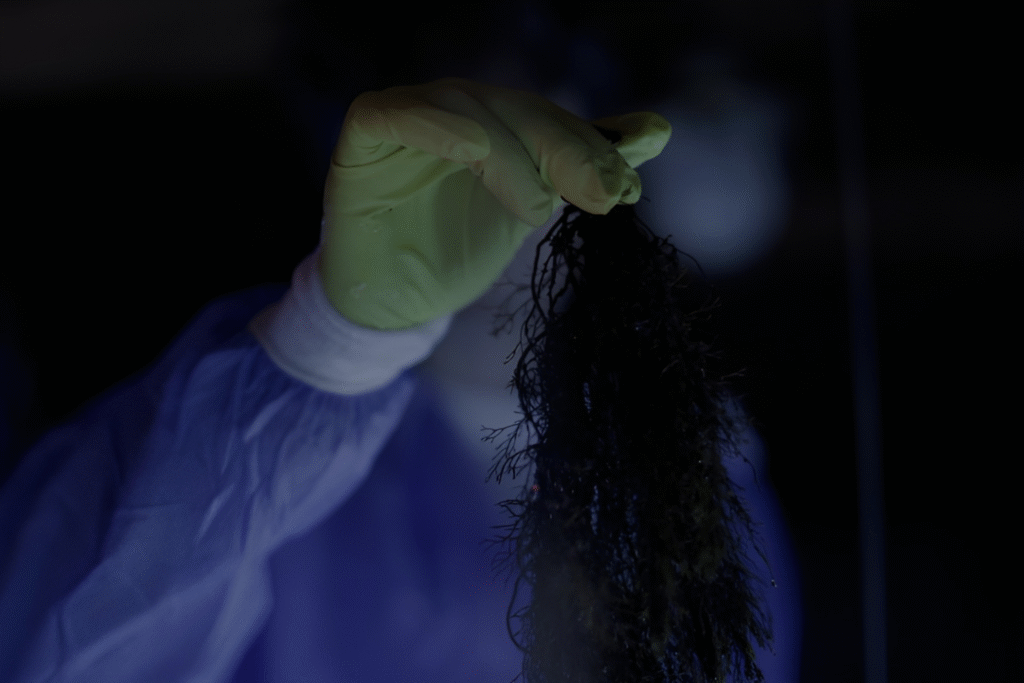
Beyond its primary goal, the Black Sea experiment yielded an unexpected discovery. Research into the impact of oil pollution on algae growth revealed that Cystoseira algae possesses a remarkable ability to absorb dissolved oil fractions from seawater. This discovery changes approaches to combating oil pollution near ports, terminals, and production platforms.
The farm structures were placed on deserted sandy areas of the seabed, which led to an expansion of the natural Cystoseira population. This resulted not only in increased biodiversity but also in improved water quality by removing excess organic matter and enriching it with oxygen.
The researchers developed concepts and roadmaps for processing the cultivated algae into various products: livestock feed additives, rapidly degradable bio-packaging, bio-fertilizers, and biofuels. Each of these areas represents a promising market with growing demand for environmentally friendly solutions.
Future Technologies: From the Lab to the Ocean
KELP FARMS has become a truly science-intensive enterprise. Throughout all stages of the project, ongoing consultations with leading research centers ensured a high level of biotechnological solutions.
The developed technologies have proven versatile and can be adapted to various marine environments. The team plans to scale up the project in the Black Sea off the coast of Turkey, in the Mediterranean and Caspian Seas, and in the Persian Gulf.
Global Perspectives and Social Impact
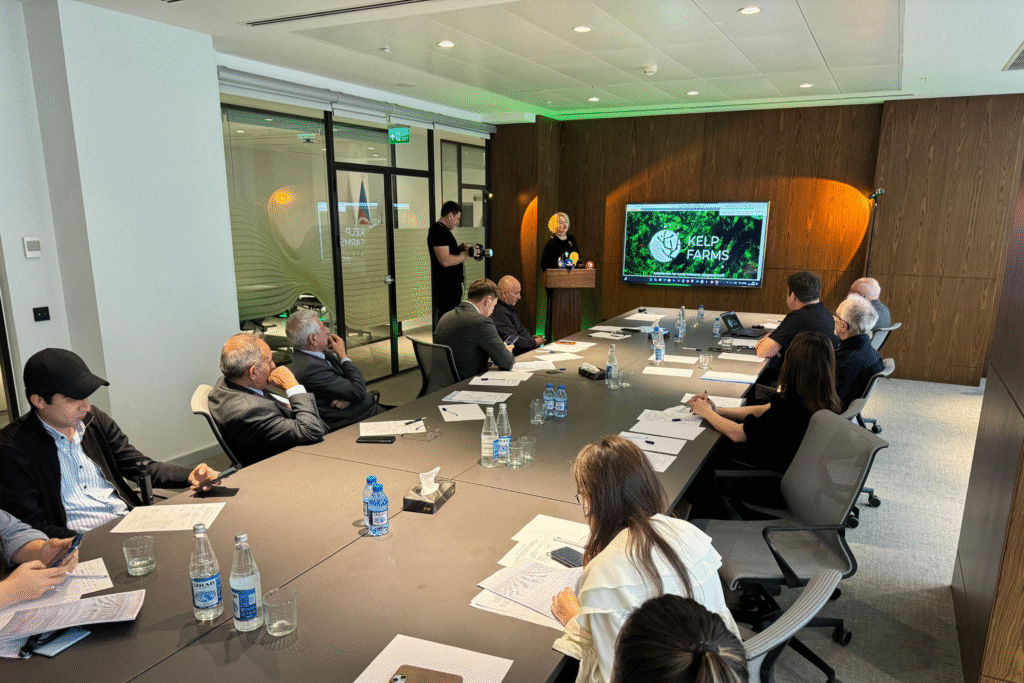
The project has received widespread international recognition. Over the two years of its implementation, it has been featured in over 110 media publications. The project’s results were presented at the UN COP29 climate conference in Baku, underscoring their significance for the global community.
Challenges and Solutions
The project faced a number of technical and logistical challenges. Growing algae in the open sea requires the creation of specialized structures capable of withstanding storms, currents, and other natural hazards. The team developed innovative engineering solutions tailored to the specific conditions of each water body.
These results demonstrate the viability of the marine ecofarm concept and pave the way for the creation of a new industry — the development of marine aquaculture for climate change.
Conclusion
KELP FARMS has demonstrated that the ocean can be a powerful ally in the fight against the climate crisis. Seaweed cultivation simultaneously addresses three key challenges: reducing atmospheric CO₂ concentrations, restoring marine biodiversity, and creating new economic opportunities.
Our experience demonstrates that even in challenging climatic and hydrological conditions, it is possible to create effective marine aquaculture systems. The technologies and knowledge gained can be scaled up for use in any region of the world, making marine eco-farms a global solution to a global problem.
At a time when traditional methods of combating climate change are proving insufficient, marine kelp farms are opening up new horizons. They represent more than just a technological solution, but a new paradigm for human interaction with the ocean — from exploitation to partnership in saving the planet.